The Lessons Learned series is different than normal book reviews. There are hundreds of great book reviews for Think & Grow Rich, and I feel like I would be wasting your time creating another one. Instead, I strive to give you the lessons I was able to extract from the book to improve my life and perhaps yours.
Everything Starts with Mindset
Like in many self-help books, very little can be accomplished in the world of self-improvement without the proper mindset. The first flawed mindset is the familiarity with the word impossible. Hill expresses the flaw mankind has in spending too much time learning how something won’t work, instead of thinking nothing is impossible. Obviously, there are impossibilities but if you go back a few hundred years, many of the things that are possible today were considered impossible back then. If you go into something with the mindset that it’s impossible then it is guaranteed to fail, if you go with the open mind that anything is possible, you give yourself a chance. Which one do you think is the better option?
Hill coins the term “autosuggestion” when talking about mindset. He believes that it is the communication between the subconscious mind and the actions that we take. The subconscious mind cannot distinguish the difference between positive or negative thoughts, it just works with whatever we feed it, and that energy manifests in our conscious mind as a basis for our actions. That’s why Hill believes having the right mindset from the start will create a chain reaction that will lead to positive actions filled with courage instead of fear.
This may seem like a lot of work for our mind but let me reassure you that it’s not. Our minds are one of the most powerful things on earth and still cannot be replicated, we still do not know the limits to the human mind.
“There are no limitations to the mind except those we acknowledge, both poverty and riches are the offspring of thought.”
Napoleon Hill
Be Decisive and Act
Before any goal can be achieved, the dual evils of indecision and procrastination need to be conquered. Hill believes that where one is found, the other is usually around too. If you try to make any improvement in your life, this pair must be dealt with first. Hill says to “kill off this pair before they completely ‘hog-tie’ you to the treadmill of FAILURE.” If you try to achieve your goals while being indecisive and a procrastinator you will be on the fast track to failure. Once you come up with a plan to conquer procrastination and indecision you need to create a detailed plan of action for your goal.
Knowledge is powerful and will open you up to many insights in life, but if it isn’t accompanied by a plan, it’s just information. Hill believes that all knowledge we gain needs to be organized and directed through plans of action. A good example is for people trying to lose weight or become healthier. They may have the knowledge and the desire, but without a plan, they will be lost and wasting their time. Instead, they should create a detailed workout and eating plan curated for their goals.
The sneakiest way that procrastination affects us is by making us feel we aren’t procrastinating or giving us good reasons to procrastinate. The art of productive procrastination is the feeling that you aren’t quite ready yet and that more research is necessary. Instead of writing the article you go read more books, which makes you feel productive, but it’s an excuse to not do the work. The research has been done, you just need to push through and do the thing. Similarly, procrastination makes us wait for the perfect scenario or circumstances to do the work. I’ll tell you right now, the timing or circumstances will never be perfect, and if by some magical way you do end up in the perfect circumstance, those moments are so rare, that you will never complete anything if you are constantly chasing that moment. Just like being disciplined to stick to your habits every day regardless of how you feel, you need to do the same in acting on your creative endeavor. Put the reps in every day, regardless of how you feel. A great quote that I believed Joe Montana said but now I can’t verify it but fits into this topic perfectly regardless of who said it went something like this.
“I became great by being good for a very long time”
You don’t have to be your best every single day, but by overcoming procrastination and showing up every day, you can eventually create greatness. Be wary of procrastination tricks and be ready to overcome them.
At the core of being decisive and acting, is making tough decisions. The most difficult decisions will bring out procrastination and doubt quickly. In these moments instead of second-guessing yourself, acknowledge that the reason these decisions are giving you pause is because they have value. Hill believes that the more courage a decision requires, the higher the value of the decision. When facing something challenging tell yourself these are the moments where you go past the place where most people stop, if it was easy everybody would do it.
“The great decisions, which served as the foundation of civilization, were reached by assuming great risks, which often meant the possibility of death.”
Napoleon Hill
Become an Autodidact
This is a point I bring up in many of my articles. It’s a recurring theme that most of the great people in history knew the importance of reading and were autodidacts. A huge mistake people make is believing their education ends when their schooling ends, but I think that’s when your education has only begun. Grade school and College were your foundation to education, now that you have the basics, you are finally free to study and learn things you are interested in, at your own pace, in your preferred medium. Whether it means learning new skills to advance your career or pursuing interests for a side hustle, being a lifelong learner will keep your brain sharp, while not allowing yourself to become stagnant.
When I was going to Junior College in the mid-2000s, I had an interaction with an elderly man in his 80s that I can still recall like it happened yesterday. We were both waiting for our Chemistry class to start, and I was confused why someone his age would be taking classes at this age instead of enjoying his retirement. He must’ve seen the look on my face because he answered the question without me asking it. He said, “I bet you’re wondering why an old guy like me is wasting his time taking college courses.” After we got to talking, he told me that the world is full of wonderful things to learn about and that it would be a shame to spend the final years of his life letting his brain atrophy, when the mind has no limits. His body may fail him, but he would make sure to keep his mind active until the very last day as a way to pay back for the wonderful experiences it provided him in his life. Even though I was only 19 years old, from that day forward I became an autodidact. It is a decision that has brought great joy to my life and hope it is a great return on investment as I get older.
“The person who stops studying merely because he has finished school is forever hopelessly doomed to mediocrity, no matter what may be his calling. The way of success is the way of continuous pursuit of knowledge. “
Napoleon Hill
The first lesson once the choice to become an autodidact is made, is how to read properly. The holy grail of active reading is “How to Read a Book” by Charles Van Doren and Mortimer Adler. (I wrote my lessons learned from this book here). There are two major mistakes made in reading and they are somewhat contradictory. Someone who has been a reader for many years and has gained the skills required to read for knowledge will often be asked by other aspiring readers how to read or what books to read. While asking these kinds of experienced readers for advice is a good idea, sometimes the answers aren’t helpful for someone just wanting to get better at reading. An experienced reader may recommend you things they should be recommending to other advanced readers like great classic works or books that may be too difficult for new readers. On top of that they may recommend reading with a pen and paper, taking notes, highlighting, using notecards, summarizing, or whatever system they use. All of these may be too overwhelming for a new reader and are skills that are extremely valuable once you become an advanced reader. A better piece of advice if you are new to reading for knowledge is to read what you love until you love to read. If you go too deep too soon, reading will feel like a chore. Learn to love reading and as you become better at it, work on reading actively and absorbing knowledge from the books you read.
Have Clarity
A mistake people make when wanting to make positive changes in their lives is being too vague in what they want. Many people will make statements like, “I want to get in shape”, or “I want to run faster” but do not have a plan on how to achieve that goal. Our brains need clarity on exactly what you want and a plan on how to get there. No goal fails faster than one that lacks a plan. Whatever the positive change you want to make is, make sure it is extremely detailed and the plan you make to accomplish it must be detailed also. If you want to lose weight don’t just plan to “eat healthier”. You must plan exactly how many calories and what meals you are going to eat. This applies to any change not just health. The author emphasizes the need to be crystal clear on what you want in life.
“There is no hope of success for the person who does not have a central purpose or definite goal at which to aim at.”
Napoleon Hill
You Need Passion
The moments where your motivation runs out, you’re tired, and you are facing struggles, are the moments where you will quit if you don’t have passion for what you are doing. Passion is the thing that will help you push past the tough times. The easiest way to not have passion is to be doing something that you do not like. Before you go all in on something, ask yourself if you like it enough to push through the difficult times, because they will come, they always do.
You Need Mentors
Many of us don’t have the luxury of having great mentors guiding us in our lives. If you have this luxury then don’t let it go to waste, but for the majority of us that don’t, we have to create our mentors, and this was a practice that Napoleon Hill thrived in. One place where we can find mentorship is through books, books can serve as absent teachers. Hill built a cabinet of invisible counselors, formed by individuals who impacted him greatly in the books he read. Some notable names in his counsel that surpass fifty members now are Abraham Lincoln, Christ, Aristotle, Plato, Socrates, Homer, and many others. Hill used a meditation practice to have a counsel with his cabinet and they would advise him on things he was pondering. While this scenario may seem like too much for you, there is nothing wrong with gaining mentorship from people in history through books. A prime example is my dedication to being an autodidact from Abraham Lincoln and my ambition to achieve my goals from Lyndon Johnson. I never met these former presidents, but their stories of leadership in Doris Kearns Goodwin’s book “Leadership: In Turbulent Times” mentored me. While a real-life mentor is irreplaceable, we can still gain benefits from mentors who are no longer around.
Final Thoughts
If you are looking for the way Napoleon Hill teaches you how to “Think & Grow Rich” then I highly recommend you read the book for yourself instead. I gained many valuable lessons on mindset, decision-making, clarity, and passion, and there may be many lessons that can be gained for you too.
If you enjoyed this content, please sign up for our newsletter below, share this post with a friend, or read some of our other blog posts. Thanks for stopping by.
Processing…
Success! You're on the list.
Whoops! There was an error and we couldn't process your subscription. Please reload the page and try again.
Disclosure: Some of the links in this post are affiliate links. This means that, at zero cost to you, I will earn an affiliate commission if you click through the link and finalize a purchase.
How do you remember what you read? What is the best note-taking app or program out there? What is the best way to take notes? These are all questions that are iterated across countless blog posts and YouTube videos and usually, you end up more lost than when you started. Finding the perfect note-taking system has been the topic I have read the most about in the past few years and like many others, I was on the quest for the perfect system. After wasting countless hours switching between note-taking apps and systems, I realized that the system that frees up your brain to do creative thinking and takes the least amount of time to keep running is best.
I had heard of the Zettlekasten method many times throughout this journey, but I always believed it to be an outdated system people would use when we didn’t have access to these sophisticated apps, yet here I am, years later, carrying a commonplace book, taking handwritten notes, writing in the margins of physical books, and using physical note cards to save my ideas. The Zettlekasten method (Slip Box Method in English) was a system the great author Niklas Luhmann (1927-1998) made popular. I won’t go in-depth on how the Zettlekasten works in this post, there’s plenty of content out that explains it better than I could, including this book. In short, Luhmann would create fleeting notes which were things you would jot down throughout the day, and literature notes which were notes he would take from his reading. Every day he would distill these notes and create permanent notes which would go onto a notecard. These notecards created the Zettlekasten and would be organized by connections rather than themes. The Zettlekasten would grow organically and become an idea generator for Luhmann’s writing. Like all my other lessons learned posts, this is more than a book review, it is the lessons that I took from the book. For “How to Take Smart Notes” most of the lessons revolve around reading, note-taking, and writing things down. I hope you enjoy it. Here are my lessons learned from How to Take Smart Notes by Sonke Ahrens.
The Importance of Note-Taking
As technology continues to evolve, the number of tools and resources you have at your disposal for information recall and data storage continues to grow. Outside of the basics, your brain doesn’t need to memorize everything anymore, computers can do a much better job at it. The thing your brain is optimized for is deep thinking, and the more resources you can free up for your brain to think, the better results you will get from any creative endeavor you are working on.
Proper note-taking is the first step to freeing up resources for your brain. One of the most daunting tasks as a creator is getting started, especially as a writer, the blank page staring at you has made many a writer quit. Ahrens explains that proper note-taking is half the work, and when you begin to create a database of notes, you aren’t starting from scratch.
“Most people struggle for much more mundane reasons, and one is the myth of the blank page itself. They struggle because they believe, as they are made to believe, that writing starts with a blank page. If you believe that you have indeed nothing at hand to fill it, you have a very good reason to panic. Just having it all in your head is not enough, as getting it down on paper is the hard bit. That is why good, productive writing is based on good note-taking. Getting something that is already written into another written piece is incomparably easier than assembling everything in your mind and then trying to retrieve it from there.”
Sonke Ahrens
As important as proper note-taking is to free up resources for your brain, a proper system is also essential. The key is to get things out of your brain into a reliable system that you can access to retrieve the information later. The quicker we can remove the burden of memorization from our brain the more resources our brain will have to do the work it was designed for. This system can be a notebook you carry with you to jot things down or a notes app on your phone. There are hundreds of systems out there, don’t go down the rabbit hole trying to figure out which one is best, just pick one that is reliable and run with it.
Niklas Luhmann, one of the best-known users of the Zettlekasten method talked about the importance of writing things down if you want to learn, but for understanding, you must translate it into your own words.
“If you want to learn something for the long run, you have to write it down. If you want to really understand something, you have to translate it into your own words. Thinking takes place as much on paper as in your own head.”
Niklas Luhmann
A good practice to bring value from your reading is not to just highlight anything that resonates with you and leave it at that. You need to either put the passage you saved into your own words or add commentary on why it’s important or how you can use it in your writing. There must be a reason why you are saving the passage and putting it into your own words will help you understand it. Many of Luhmann’s associates were surprised by how effortless he made his writing seem. The quality was outstanding, yet Luhmann wasn’t killing himself to create his work, he was having fun, he would go on to say that the Slip Box was doing most of the work for him, he just had to get it on paper. For Luhmann the Zettlekasten freed up resources for his brain to create great writing, he wasn’t using up valuable resources to memorize quotes or ideas, the Zettlekasten did that for him.
Ahrens emphasizes again that the goal of any tool or system is the capability of giving you an undistracted brain.
“That is pretty much it. To have an undistracted brain to think with and a reliable collection of notes to think in is pretty much all we need. Everything else is just clutter.”
Sonke Ahrens
To summarize the lesson, there is great value in note-taking if done correctly. The combination of the way you consume content, take notes, and store information are all a part of a system, regardless of which one you use, you need to remember that the goal is to free up resources for your brain.
“The slip-box takes care of storing facts and information. Thinking and understanding is what it can’t take off your shoulders, which is why it makes sense to focus on this part of the work. That it facilitates learning as well is a nice side effect.”
Sonke Ahrens
Always Have a Way to Capture Your Ideas
I am a big believer in the commonplace book and the more I read about the great thinkers in history they all had something in common: they loved to read, and they wrote things down. Just like the note-taking system, the way that you write things down doesn’t matter if you are getting the ideas out of your brain.
“You need something to capture ideas whenever and wherever they pop into your head. Whatever you use, it should not require any thoughts, attention or multiple steps to write it down. It can be a notebook, a napkin, an app on your phone or iPad.”
Sonke Ahrens
For people who work in an office, it may be more convenient to have a text document open for always jotting down ideas or a notepad on your desk. For people on the go, it may be easier to carry a pocket notebook or use the notes app on your phone. Luhmann called these “fleeting notes” which were thoughts or ideas we jotted down throughout the day and could eventually become permanent notes which were the actual note cards that would go in the Zettlekasten.
“I recommend having pen and paper with you at all times. It is really hard to beat a notebook in its simplicity. If you use other tools, make sure everything ends up in one place, a central inbox or something like that, where you can process it soon, ideally within a day.”
Sonke Ahrens
Regardless of the tool you use, the information that comes in needs to be in a central location that can be distilled either daily, weekly, or monthly, depending on how many things you are saving. For myself I have an inbox notebook on Evernote that everything digital gets sent to throughout the week, on Sunday afternoon I go through and turn some of them into permanent notes and discard the rest. The same goes for my everyday carry pocket notebook which stores all my ideas that come to me throughout the day. I distill this one once it fills up and create perhaps ten permanent notes for every notebook I fill up. It may seem like a lot I write down goes to waste but in reality, I am just constantly offloading things to the notebook, so my brain has as many resources as possible to think.
Always Be Learning
In this blog, I constantly preach taking action. Don’t be a collector of information and do something with all the reading you’re doing. On the other side of this argument, you can take the idea of taking action too far and completely stop researching. There needs to be a fine balance and you need to treat research as a slow burn that constantly runs in the background. For myself, scheduling a 30-minute reading session every day keeps that steady flow of information coming into my system while I continue to dedicate the majority of my time to taking action (writing for me) in my craft. Ahrens has a great quote talking about the importance of focusing on your work but continuing to learn.
“Working as if nothing else counts than writing does not mean spending more time writing at the expense of everything else. Only if we compartmentalize our work into different, isolated tasks will it seem like focusing on writing reduces the time we spend on other tasks. But it does not mean to read less, for this is the main source of the writing material. It doesn’t mean to attend fewer lectures or seminars, because they provide you with the ideas to write about and questions worth answering.”
Sonke Ahrens
One of the most embarrassing situations as a reader is when you are talking about a book and people start to ask you questions about it and you are completely stumped. That’s why it’s a good idea to put notes you save from a book into your own words and revisit those notes every so often. It’s been proven that active recall and using your own words are essential to learning. If you go back and your notes make no sense to you, most likely you didn’t put them in your own words.
This may seem like a lot of work, but you must ask yourself what am I doing all of this for? Is it to become smarter and learn or am I just wanting to show off how smart I look by displaying the number of books I’ve read, even if I didn’t learn anything from them? Ahrens tells us that there comes a moment when we must make a choice.
“Now we are faced with a clear choice: We have to choose between feeling smarter or becoming smarter. And while writing down an idea feels like a detour, extra time spent, not writing it down is the real waste of time, as it renders most of what we read as ineffectual.”
Sonke Ahrens
Do you want to feel smarter or actually become smarter?
Stop Multitasking
I believe that multitasking is only successful if you are doing activities that don’t require brain power. Yes, you can fold laundry while watching TV or listen to a podcast while mowing the lawn, because one of these activities uses very little brain power. On the other hand, context switching between activities that require critical thinking will diminish the quality and increase the time they take to complete. My own experience with this lesson was after reading Deep Work by Cal Newport, Cal would emphasize that 1 hour of undistracted deep work is the equivalent of 4 hours of distracted work. I tested this out myself when I went back to college in my 30s and after I locked myself in my office for 1 hour at a time, not bringing my phone with me, I miraculously began to understand all the coursework easily and passed the rest of my classes without spending hours cramming for every test.
The problem with focus is that it’s a skill that can be unlearned, and the easiest way to unlearn is it to never allow yourself to be bored. By being bored, I mean never allowing your mind to wander and think. At every hint of boredom, you go to grab your phone or do something to distract yourself. Next time you’re in line at the supermarket or are waiting for the server to bring your food, look around and let your mind wander, it will be concerning how many people are glued to their phones, filling their brains with constant distraction. This rears its ugly head when you need to focus on something that requires deep thinking, your mind is constantly making you desire that quick fix of distraction from your phone, causing you to produce low-quality work for a longer period. Focus can be retrained by giving yourself short sessions throughout the day to just be bored, this may seem counterproductive until you think of it as a training activity to regain your ability to focus. These sessions can start small, like once a week commuting to work with nothing playing through the radio, letting your mind wander, and observing your surroundings. Going on walks without your phone is also a great way to regain your focus. Another added benefit is that walking has been proven to improve your thinking and is great for your health. Many of the greatest thinkers in history give credit to a long walk for their moments of enlightenment.
Allow yourself to be bored every once in a while and watch how much your concentration improves when faced with a difficult task.
Final Thoughts
How to Take Smart Notes was one of the most difficult books I’ve had to summarize because the book has no fluff. Every page is filled with knowledge. I created 42 permanent notes from a book that is only 178 pages long. I strongly encourage you to read this book whether you create a Zettlekasten or use your own system, it brings great value if you are looking for ways to improve your learning and creativity.
If you enjoyed this content, please sign up for our newsletter below, share this post with a friend, or read some of our other blog posts. Thanks for stopping by.
Disclosure: Some of the links in this post are affiliate links. This means that, at zero cost to you, I will earn an affiliate commission if you click through the link and finalize a purchase.
Processing…
Success! You're on the list.
Whoops! There was an error and we couldn't process your subscription. Please reload the page and try again.
The Education of a Wandering Man is a memoir of the famous author Louis L’Amour, born in 1908, he went on to write over 100 works, mostly westerns. This book focuses on his life growing up during the great depression when he came to heavily rely on books, travel, and self-education to become the man he ended up being. Here are the lessons I learned.
You Can Find Time to Read
The most common excuse people use for not being able to do something is that they do not have enough time. While I’m not questioning how busy your life is, you will be surprised by how many moments of free time you have that end up being filled by scrolling on your phone. Even before iPhones and Netflix, people were using the same excuse.
“Often I hear people say they do not have time to read. That’s absolute nonsense. In the one year during which I kept that kind of record, I read twenty-five books while waiting for people. In offices, applying for jobs, waiting to see a dentist, waiting in a restaurant for friends, many such places. I read on buses, trains, and planes. If one really wants to learn, one has to decide what is important. Spending an evening on the town? Attending a ball game? Or learning something that can be with you your life long?”
(L’Amour, 1990)
It takes being aware of lost reading opportunities during short breaks or leisure time throughout the day and making sacrifices to make more time to read. At first, reading may seem like a hobby but once you become an advanced reader and read to learn, it becomes a tool for life.
Starting in 1919 a Kansas publishing company started creating “Little Blue Books” which could easily fit in your pocket and became popular for having something to always read. L’Amour would stuff his pockets with these little books to never let small reading opportunities go to waste.
The Little Blue Books
“The Little Blue Books were a godsend to wandering men and no doubt to many others. Published in Girard, Kansas, by Haldeman-Julius, they were slight larger than a playing card and had sky-blue paper covers with heavy black print titles. I believe there were something more than three thousand titles in all and they were sold on newsstands for 5 or 10 cents each. Often in the years following, I carried ten or fifteen of them in my pockets, reading when I could.”
(L’Amour, 1990)
Granted that we have more things fighting for our attention today than in the early 1900’s we also have many more tools to fight against it. The same device that vies for our attention can be curated to be an awesome learning tool and can allow us to learn by watching, listening, or reading at any given moment.
They even made Kindle readers that can fit in our pocket, you can carry thousands of books with you at all times, Louis knew how important reading was to his life and would make sacrifices to read any chance he got, even if he didn’t own a Kindle.
I was never without a book, carrying one with me wherever I went and reading at every opportunity. Often I would eat alone in restaurants, arriving after the rush period and spending a good bit of time over coffee, reading, taking notes on books I expected to write, or thinking about what I was reading.
(L’Amour, 1990)
Have you ever found yourself scrolling through Netflix not finding anything good to watch, or endlessly scrolling through social media even though it’s not entertaining anymore? This is a burnout from the constant dopamine hits that short-form entertainment gives us because the gratification has no delay. Even watching a movie is a better form of leisure because we must follow along for 1-2 hours and we get rewarded by finding out what happens at the end. The same goes for reading, picking up and reading a book for a few minutes will feel like a monumental task after our dopamine rewards system has been fried from constant gratification every few seconds. We will feel boredom set in quickly and the desire to check our phones will quickly overcome us. In his books “Deep Work” and “Digital Minimalism” Cal Newport talks about the similarities between being able to be bored and being able to focus and how they go hand in hand. Someone who never allows themselves to be bored and pulls out their smartphone at even the slightest hint of boredom will have a hard time focusing on things like reading. Once you can regain the relationship with delayed gratification and begin to consume more long-form content you will see how many great books are out there and you will never run out of adventures to go on or things to learn about.
“Looking back over my years of reading, I am amazed at how much really wonderful stuff there is out there, and it is a pity that anyone should deprive himself of the chance to read it, yet many do. Ours is not a leisurely time, and our readers prefer page-turners, stories or other books that lead one eagerly from page to page. It is also important, to those for whom reading is difficult, to have books that demand one read on, and on.“
(L’Amour, 1990)
When you find something truly important to you like books were for L’Amour you begin to make sacrifices for it. You’re thing might not be writing and reading like it was for Louis but whatever your goals are, you will have to make sacrifices along the way like Louis did.
“Each book gave me much to think about, and on my long bus rides I frequently went over what I had read. For a while during this period I lived on one sandwich a day so I could save the money to buy three books of which I had read reviews. They were Marriage and Morals by Bertrand Russell, Liberty Under the Soviets by Roger Baldwin, and Men and Machines by Stuart Chase.“
(L’Amour, 1990)
The great thing about books is the level of friction to begin reading is extremely low. L’Amour puts it best, “A book can be carried away and read at leisure. It needs nothing but an eye, a brain, and the ability to read.” With the recent rise of audiobooks, the friction for reading is at an all-time low, you can pop an audiobook while most passive activities. Doing yard work has never been better when I can listen to my favorite books at the same time.
In conclusion to this lesson, the time to read is there you just have to look for it, and in some cases, you have to make some sacrifices to find it. Reading may not be your thing right now but if it’s something you’re interested in then reading what you love until you love to read, still stands true today. Don’t jump into the most difficult books because they are on a list of “books to read before you die”, instead read something you enjoy, building that love for reading first.
“For those who have not been readers, my advice is to read what entertains you. Reading is fun. Reading is adventure. It is not important what you read at first, only that you read.“
(L’Amour, 1990)
Don’t Remain Uneducated
Louis L’Amour believed there was no reason for anyone to remain uneducated if they had the desire and persistence to learn.
“There is no reason why anyone cannot get an education if he or she wants it badly enough and is persistent. Most cities have libraries, and often state libraries will mail books to a reader. Books are available on every conceivable subject and there are many very good “how to” books from which one can learn the basics of a trade.“
(L’Amour, 1990)
If Louis believed we had the resources back then, imagine what he would think now. Just the internet alone is enough to fill your free time with learning anything you can think of, now you even have that access with you in your pocket or purse at all times, yet we rather spend it mindlessly scrolling for entertainment purposes. You can have the greatest tools on earth but until you have the discipline to use them correctly you will let it go to waste.
This stems from the question, “What about formal education?” L’Amour always believed in formal education as a road map or outline on how or what to study for a certain career but it didn’t do well in guiding you to find what you love.
“No matter how much I admire our schools, I know that no university exists that can provide an education; what a university can provide is an outline, to give the learner a direction and guidance. The rest one has to do for oneself.”
(L’Amour, 1990)
Many parents and students believe that education should do all the work for you, that’s what you’re paying them for right? A university can give you the road map, but we must educate ourselves, especially after our formal education years are over. Many of you believe that our education ends once we have a job in our field and have graduated from college, but that’s when our education should be prioritized even more, now we have the freedom to learn about anything we want on our own time.
The reason the majority of great people in history were voracious readers was because they knew the superpower of reading. Books give you the knowledge it took someone a lifetime to acquire, in a couple hundred pages. Think about that for a moment, whatever problem you may be facing in your life right now, someone in history went through the same problem, overcame it, and wrote about it. Is there anything more valuable than that?
“It is often said that one has but one life to live, but that is nonsense. For one who reads, there is no limit to the number of lives that may be lived, for fiction, biography, and history offer an inexhaustible number of lives in many parts of the world, in all periods of time. So it was with me. I saved myself much hardship by learning from the experiences of others, learning what to expect and what to avoid. I have no doubt that my vicarious experience saved me from mistakes I might otherwise have made—not to say I did not make many along the way.“
(L’Amour, 1990)
As you go off on the journey of self-education it is important to find what kind of learning resonates with you. This can vary from location, medium, and timing. For the early rises reading a good book before the start of your day can be your own thing, for the night owls, staying up into the morning watching YouTube videos on how to program may be your thing. That’s the great thing about becoming an autodidact, is the freedom to learn however way we want.
“My way was suited to me. I have never been very good at taking instruction. I enjoy lectures, and have attended many, but mostly I prefer the quiet of a library and the freedom to go off in any direction that pleases me.”
(L’Amour, 1990)
According to L’Amour, the greatest gift you can give another is the desire to know. Even if the feeling is short-lived, doesn’t it feel great when we become curious about something? Those initial moments of hearing about it for the first time and you just want to rush home and watch some videos about it and then read some books. I find many of these when reading books and the author will mention a related work, topic, or person I had never heard about. Desire is the key, but we must put ourselves in situations where we are open to receiving the spark to start that fire. Louis has a great quote about the desire to learn that was one of my favorites in the entire book.
“I think the greatest gift anyone can give to another is the desire to know, to understand. Life is not for simply watching spectator sports, or for taking part in them; it is not for simply living from one working day to the next. Life is for delving, discovering, learning. Today, one can sit in the comfort of his own home and explore any part of the world or even outer space through books. They are all around us, offering such riches as can scarcely be believed. Also, I might add, having done both, it is better to sit in comfort with a cold drink at hand and read the tale than to actually walk out of the Mohave Desert as I did. The armchair adventurer has all the advantages, believe me. As I have said elsewhere, and more than once, I believe adventure is nothing but a romantic name for trouble. What people speak of as adventure is something nobody in his right mind would seek out, and it becomes romantic only when one is safely at home. It is much better to watch someone riding a camel across a desert on a movie screen than it is to be up on the camel’s back, traveling at a pace of two and a half to three miles per hour through a blazing hot day with the sand blowing.”
(L’Amour, 1990)
The second most common excuse after not having enough time that I get from people when I advise them to read and learn more is that their brain is already too full. By too full they believe that they feel overwhelmed with life as it currently is and that there is no way they could fit anything else onto their plate. While it may be true that you are incredibly busy, a lot of the feeling of being overwhelmed may just be a lack of structure and organization. Realistically, there are no limits to the human mind.
“Personally, I do not believe the human mind has any limits but those we impose ourselves. I believe that creativity and inventiveness are there for anybody willing to apply himself. I do not believe that man has even begun to realize who he is or what he can become. So far he has been playing it by ear, following paths of least resistance, getting by—because most others were just getting by too.”
(L’Amour, 1990)
Our mind isn’t what’s holding us back from doing more, when we can make the time, our mind will be ready to serve us.
The third most common excuse people use to not educate themselves is that they do not have the right teacher. While nothing compares to one-on-one mentorship, you forget that books are teachers. L’Amour emphasizes that great people are constantly forgotten about, but the authors of great books are remembered forever and are always there to teach us their lessons.
“Who remembers the millionaires of the past? Who even remembers the popular heroes? But we do remember a poor stonecutter in Athens named Socrates, a thief from the gutters of Paris named Francois Villon, an actor in London called Shakespeare, a poor farmer in Scotland named Robert Burns, and a weaver in Mayilapur who wrote the Kural. Upon the shelves of our libraries, the world’s greatest teachers await our questions.”
(L’Amour, 1990)
While an actual teacher has its advantages, a good book can teach forever.
“Without books we should very likely be a still-primitive people living in the shadow of traditions that faded with years until only a blur remained, and different memories would remember the past in different ways. A parent or a teacher has only his lifetime; a good book can teach forever.”
(L’Amour, 1990)
“BOOKS ARE THE building blocks of civilization, for without the written word, a man knows nothing beyond what occurs during his own brief years and, perhaps, in a few tales his parents tell him. Without books, we would never have known of Julius Caesar, Cleopatra, or Hannibal. George Washington would have been forgotten and Abraham Lincoln a vague memory.”
(L’Amour, 1990)
You now have plenty of reasons to not remain uneducated. Open yourself up to find the desire to learn, and once you do, use all the resources at your disposal, and give it all you’ve got.
You Can Be Lonely While Not Being Alone
Have you ever been surrounded by people but still felt alone, that’s because you aren’t surrounded by the right people. There can be many reasons for this, you may not have anything in common with these people or share any interests with them. L’Amour talks about facing this same dilemma of being surrounded by people but still longing for someone who shares his interests.
“I suppose I was lonely. I know that often I longed for someone with whom I could talk of books, writers, and things of the mind, but that was not to be for a long time, except here and there when I chanced on some other lost literary soul. Loneliness is of many kinds, and the mere presence and companionship of people does not suffice. The people I had been meeting were friendly, pleasant, and the salt of the earth, but they did not speak my language. I enjoyed them, but something in me reached out for more.”
(L’Amour, 1990)
Loneliness can come in different shapes and forms. Sometimes you need to find the right people to surround yourself with, this can be accomplished by hanging around places that host people with similar interests as yours. With social media now that can be easier than ever, there are groups out there for any interest you can think of, it just takes a little bit of effort.
On the opposite end of this idea, you also need to work on not relying on others for your happiness. Relationships need to be considered as a bonus to your happiness, not the sole cause for your happiness. You need to work on being happy by yourself in doing things you love and growing as a person, then when you meet the right friends or partners, they will be a bonus. L’Amour quotes Professor Thomas Davidson in being happy alone.
“Associate with the noblest people you can find; read the best books; live with the mighty. But learn to be happy alone. Rely upon your own energies, and so not wait for, or depend on other people.”
Just Start
While L’Amour’s advice is directed at writers, I believe it can be associated with anyone having a hard time starting something. People complain that they don’t have any ideas, or they don’t know what to read about but Louis believes that nothing will happen if you never start, just like the water does not flow until the faucet is turned on.
“There are so many wonderful stories to be written, and so much material to be used. When I hear people talking of writer’s block, I am amazed. Start writing, no matter about what. The water does not flow until the faucet is turned on. You can sit and look at a page for a long time and nothing will happen. Start writing and it will.”
(L’Amour, 1990)
Whatever you are trying to create, just start with something. Even if it’s putting your ideas on paper, starting anything will get the ball rolling and allow your mind to shift into creator mode. There’s no excuse to not have ideas because there are a million things to write about or create, and the resources for them are out there, you just must find them.
Once you start creating the work you are destined to do, the results don’t matter. While using the results as a guide on adjustments or areas of focus, it shouldn’t be a parameter to start working on the next things. Many authors including L’Amour believe in starting the next thing right away instead of waiting for the results of the thing you just finished. That thing is done, it’s time to start working on the next one.
“My secret was that no sooner did I put something in the mail than I wrote something else and sent it off. Each rejection was cushioned by my expectations for the other manuscripts. Too many writers put their all into one script, and when it is rejected they are devastated.”
(L’Amour, 1990)
While mentorship and finding a great teacher are very important when you are in the process of honing your craft, there comes a time when you must find your way. If you are constantly seeking help with every step of the process, you will never become self-sufficient. Allow yourself to figure things out on your own, allow yourself to fail, and learn from your mistakes. L’Amour took self-education and writing to another level and usually allowed his experiences and failure to guide him to success instead of asking for help.
“Often I am asked if any writer ever helped or advised me. None did. However, I was not asking for help either, and I do not believe one should. If one wishes to write, he or she had better be writing, and there is no real way in which one writer can help another. Each must find his own way, as I was to find mine.”
(L’Amour, 1990)
Each of you must find your own way in writing or anything you want to create.
Another excuse people use to not get work done is not having the right circumstances. People will use every excuse in the book to not do the work, either the weather is off, they don’t have the perfect program, they aren’t in the right mood, it’s not the right time, or they haven’t done enough research. I find myself in this dilemma also but I will justify it by doing something productive when in reality it’s just the “art of productive procrastinating” when you do something that’s considered productive but much less urgent, to avoid doing the real work. As a writer this happens often with having to do more research or read more books, that’s the fun part, sitting down to write is the actual work. Louis also emphasizes that a writer did not need the perfect atmosphere to write, they could do their craft anywhere.
“PPeople are always interested in how a writer works, as if that made a difference. Some imagine a writer must have complete quiet, or some special atmosphere. The fact is, a professional writer can write anywhere, although some environments are undoubtedly more favorable than others. Some excellent writing is done these days by newspaper people working in a bustling, busy newsroom.”
(L’Amour, 1990)
There is an extreme solution that war leaders would use to have their troops go all in and hold nothing back, it was called “burn the boats”. When they landed on an island to fight a battle, burning the boats behind them gave them no other way of escape besides winning the war, in extreme cases, you must burn the boats to go all in on what you want to become. Today that would translate to something like quitting your job to go all in on your passion. This advice needs to be taken with caution, especially when others rely on your well-being like family. I still wanted to put it out there because if you have nothing to lose. Why not burn the boats? Louis L’Amour felt this way about his writing, he knew he had no other choice.
“For me there was no choice. Whatever else I did, I had to make a living from my writing, and that meant work and lots of it.“
(L’Amour, 1990)
The Power of Stories
Stories are ideas. When we feel like there isn’t anything to write about or are bored with the same things, realize how rich and wonderful our world is. Learn about it and experience it.
“There were places and people to be seen and remembered, there were stories to be heard, and I was hungry for them all. Ours is a rich and wonderful world, and there are stories everywhere. Nobody should ever try to second-guess history; the facts are fantastic enough.”
(L’Amour, 1990)
The only downside to history is that the farther we go back the more biased it becomes because writing was an art, and for most of history that art was excluded to the elites. We didn’t hear much about the farmers and laborers until writing and reading began to become accessible to all. That’s why being literate is so important regardless of what your status is.
“THERE IS A tendency, I believe, sometimes to judge the life-style of a whole people by what we know of a group. Writers and artists are inclined to life-styles different from those of artisans or farmers, merchants or soldiers. Most of what history we have was written by people who did not labor for their bread, or if they did, like Socrates, they often courted or associated with a different kind of people from their fellow workmen. We know all too little of how work was done in times past, as such things were deemed beneath notice, a matter for slaves or other laborers. Most of our pictures of ancient life are offered us by an elite group, concerned with themselves and their way of life.”
(L’Amour, 1990)
That’s why books that were written by non-elites sometimes become classics because it was so rare to get a view of day to day life of regular people. A great example of this is the book “12 Years a Slave”. It sat in obscurity for nearly 100 years before being rediscovered and brought to mass media. We got an inside view of what it was like to be a slave in the 1800s instead of reading about it from the point of view of someone who never experienced it. A lot of the history of regular people is lost because, in the old days, they weren’t the ones doing the writing.
This has led to much of American history being untold. L’Amour believed that a great amount of history that claims to be the first to have done something, is usually incorrect and there was most likely someone that already did it before them. A great example is that many believe Lewis and Clark were the first to trek across North America, yet many came before them, this was just the first documented account.
“As I delved deeper into the background of America, I became tantalized by the unwritten chapters, most of which we will never know because the information simply is not there. Of course, there is always the chance that in old records in England, France, or Spain we may turn up stories now unknown. The records we have are those of known explorations, but what of the many that were unknown? In doing research one stumbles upon tantalizing tidbits, mentions of white men living with Indians in areas where no white men were known to be, mentions of boatloads of Carolina adventurers at the mouth of the Ohio a hundred years before Daniel Boone was born, of that party of French people who went west from Illinois to Washington before Lewis and Clark’s trek over almost the same route. In almost every instance where somebody was supposed to be first, we find there was somebody already there.”
(L’Amour, 1990)
History is a great resource, and we should continue to learn from it, but moving forward everyone should make a habit of writing things down and writing their own story so moving forward history continues to become more accurate.
The Book Collector
Ask any bibliophile what the first thing they look for when they go into someone’s home for the first time is, and they will say “I look for the bookshelves”. We hope every home has at least one, and once you find it, you can almost judge a person by the books they collect. You can almost see what season of their life they are going through based on what they are reading and collecting. If you walked into my home 15 years ago, you would find four cheap Walmart bookshelves crammed with mass-market science fiction and fantasy novels. Today, you will find beautiful bookshelves made of real wood, with books that have greatly impacted my life, mostly history, philosophy, biographies, and the occasional fiction book. They are two completely different phases of my life, yet each one was very important to me. The phase 15 years ago was just as important because I was learning to love reading, if I jumped into Aristotle 15 years ago, I would’ve hated reading, I wasn’t ready. That’s why I’ll repeat the quote from earlier, read what you love until you love to read.
I’ll conclude this lesson with L’Amour’s belief that your library says a lot about who you are and that we should choose quality over quantity when collecting books.
“My library is not simply an accumulation of books. Each book has its reason for being there, and there is no deadwood on those shelves. Those I have are what I believe to be the best in their field, and if not that, they at least have something of value to offer. I have no book I could not read again with profit, and most of them require rereading. Occasionally, when not too pressed to get on with a story, I will go along the shelves, take down a half-dozen books, and just browse through them.”
(L’Amour, 1990)
Final Thoughts
Education of a Wandering Man has been my favorite book I have read in the past couple of years because I resonated with it greatly. I truly believe that If I lived 100 years ago, I would have lived a life very similar to Louis L’Amour’s. Louis encourages the importance of being an avid reader and continuing to self-educate yourself for the entirety of your life, that’s advice that will never get old. I strongly recommend this one.
If you enjoyed this content, please sign up for our newsletter below, share this post with a friend, or read some of our other blog posts. Thanks for stopping by.
Disclosure: Some of the links in this post are affiliate links. This means that, at zero cost to you, I will earn an affiliate commission if you click through the link and finalize a purchase.
Processing…
Success! You're on the list.
Whoops! There was an error and we couldn't process your subscription. Please reload the page and try again.
Read: May 30, 2022 – June 27, 2022 | January 8, 2024 – January 31, 2024
Rating: 5/5 Stars
You Have the Power to Fix Your Problems
One of the first lessons Epictetus introduces in his Discourses is the amount of control and resources you possess to solve your problems, instead of complaining or asking for help. His first quote on the downside of complaining is one of my favorites in the entire book,
[33] ‘But my nose is running!’ What do you have hands for, idiot, if not to wipe it? [31] ‘But how is it right that there be running noses in the first place?’ [32] Instead of thinking up protests, wouldn’t it be easier just to wipe your nose?
Epictetus
Epictetus shows you that something as menial as wiping your nose will find reason for complaints from people, when a simple tissue (resource) would fix the problem, don’t use every minor inconvenience as a reason to complain, instead fix the problem and move on with your life, you will be much happier.
[3] ‘Who’s my “master”?’ Whoever controls what you desire or dislike. [4] So in life our first job is this, to divide and distinguish things into two categories: externals I cannot control, but the choices I make with regard to them I do control.
Epictetus
Acknowledging that you have the resources to fix a minor inconvenience can lead to the realization that you have tools at your disposal to solve most of life’s problems. Instead of praying for a solution, use the tools already given to you, to solve the problem.
Now that you know all this, come and appreciate the resources you have, and when that is done, say, ‘Bring on whatever difficulties you like, Zeus; I have resources and a constitution that you gave me by means of which I can do myself credit whatever happens.’
Epictetus
Once the seed has been planted in you that you can face challenges with the resources at your disposal you begin to face life with a different perspective. Instead of being fearful of any inconvenience that comes your way, you face your challenges directly, knowing that you have the tools to face them. Sometimes it takes one small victory or realization like using a tissue to wipe your nose, to understand that you have the resources to face your challenges.
Epictetus follows up this with a motivating quote, challenging his readers to bring him his problems and he will show them they have the resources to overcome them.
I am prepared to show you that you have resources and a character naturally strong and resilient; show me in return what grounds you have for being peevish and malcontent.
Epictetus
Realistically, there are things out of your control and no matter what resources you have, you can’t fix them. This is when the lesson of control comes in. Epictetus emphasizes the point that if something is out of your control, you still have control over how you react to it.
[32] You should thank the gods for making you strong enough to survive what you cannot control, and only responsible for what you can. [33] The gods have released you from accountability for your parents, your siblings, your body, your possessions–for death and for life itself. [34] They made you responsible only for what is in your power–the proper use of impressions. [35] So why take on the burden of matters which you cannot answer for? You are only making unnecessary problems for yourself.
Epictetus
If outside circumstances constantly dictate how you feel and act, then they have ownership over you, ask yourself, “Who is my master?” Do you want to be the master of your domain or let others be masters over yours?
[3] ‘Who’s my “master”?’ Whoever controls what you desire or dislike. [4] So in life our first job is this, to divide and distinguish things into two categories: externals I cannot control, but the choices I make with regard to them I do control.
Epictetus
Once you can distinguish between the things you can and cannot control, you start to become the master of yourself. With the knowledge of control at our disposal you begin to view challenges differently and instead of complaining over every one of them, you become smarter and find the right resource to overcome them. Epictetus reminds us that for anything you are facing, God has given you the resources to overcome it, the real challenge is in finding the right resource.
For every challenge, remember the resources you have within you to cope with it. Provoked by the sight of a handsome man or a beautiful woman, you will discover within you the contrary power of self-restraint. Faced with pain, you will discover the power of endurance. If you are insulted, you will discover patience. In time, you will grow to be confident that there is not a single impression that you will not have the moral means to tolerate.
Epictetus
Only worry about the circumstances you can control, and the ones you can’t just be thankful you have the strength to survive them. If you didn’t you wouldn’t be here to talk about it anyway. Book II of the Discourses was filled with great lessons on control, my main takeaway is that as long as you do the right thing in all things that are under your control, by finding the proper resources to overcome it, then whatever else happens is irrelevant, and you just need to control how you react to it.
Seek Your Own Approval
Now worse than ever, people are doing things for other’s approval instead of their own. From the way they talk and dress, they do things they don’t enjoy, only to gain other’s approval. While fitting into society is important, you shouldn’t give up your own approval to accomplish it, most likely you are just hanging around the wrong people. Epictetus tells us that it’s a sign we are properly grounded in life when we stop looking for other’s approval.
When someone is properly grounded in life, they shouldn’t have to look outside themselves for approval.
Epictetus
Epictetus takes it a level further and believes that seeking others’ approval goes against your character as a philosopher while compromising your integrity in the process. It seems harsh but doing things for others and not you is the gateway to a large number of ugly habits like envy, jealousy, and hate.
If you are ever tempted to look for outside approval, realize that you have compromised your integrity. So be satisfied just being a philosopher, and if you need a witness in addition, be your own; and you will be all the witness you could desire.
Epictetus
While seeking the approval of others opens the gateway to envy and temptation, it also allows you to develop the ugly habit of desiring things that others have. Epictetus says that if you begin to care and desire things that aren’t yours, you begin to surrender what is yours in the process. Protect what belongs to you and don’t desire what belongs to others.
‘Protect what belongs to you at all costs; don’t desire what belongs to another.’ Trustworthiness is your own, decency and a sense of shame; no one can take them from you or prevent you from using these qualities except yourself–which you do the moment you begin to care about what isn’t yours, surrendering what is yours in the process.
Epictetus
Be proud of what you have accomplished, sometimes all it takes is a step back to enjoy the things you have attained through your hard work and not desire what others have. This also requires a balance because if you are too prideful in what you have, you tend to flaunt it and make others desire what you have. While you shouldn’t desire what others have, you also shouldn’t tempt others to desire what you have, perhaps they are also on the journey like you are and you should be respectful of that process.
As Epictetus explains,
Look at it this way. You have beautiful clothes and your neighbour does not. You have a window and want to give them an airing. The neighbour does not know what man’s good consists in, but imagines it means having beautiful clothes–the opinion you happen to share. [14] It’s a foregone conclusion that he’s going to try and steal them. I mean, when starving people see you gobbling down food all by yourself, you know one of them will make a grab at it. So don’t provoke them–don’t air your clothes at the window!
Epictetus
There is Nothing to Fear but Fear Itself
The FDR quote about fear is popular because people can relate to it. You live your life in constant fear of things that most likely will never come true, and if they did, you would have lived through it twice. Epictetus has the same mindset in his views of fearing death.
[7] When death appears an evil, we should have ready the fact that it is a duty to avoid evil things, whereas death is necessary and cannot be avoided. [8] I mean, where am I going to go to get away from it? Maybe I am not Sarpedon, the son of Zeus, so that I can say in the same grand manner, ‘I will go, and either win the prize for valour myself, or give another the opportunity to gain it.’45 The former may be beyond us, but at least the latter is within our reach. [9] And where can I go to escape death in any case? Tell me the country, give me the name of the people who are safe from death, where I can get asylum; provide me with the magic charm. No, I cannot escape death, [10] but at least I can escape the fear of it–or do I have to die moaning and groaning too?
Epictetus
You fear death, but it’s something inevitable. Why not conquer our fear of death instead? It’s easier said than done but even if death is the end of your life, you must realize that it happens to everyone, no one in history has been able to avoid death, so why should you fear it? Only worry about the things you can control, and if you can’t control it, worry about how you react to it. With death, we can go as far as not even giving it that much consideration because once it happens, we won’t even have the opportunity to react to it. The real culprit in all of this is the fear of things, our greatest fears are pain and death, but Epictetus tells us the only thing we should fear is not facing these things with bravery.
Death and pain are not frightening, it’s the fear of pain and death we need to fear. Which is why we praise the poet who wrote, ‘Death is not fearful, but dying like a coward is.’
Epictetus
Make Use of What You’ve Learned
Epictetus said,
Step forward and make use of what you’ve learned. [56] It isn’t more logic chopping that is needed–our Stoic texts are full of that. What we need now are people to apply their learning and bear witness to their learning in their actions. [57] Please, be the one to take on this character, I am tired in my teaching of invoking examples from the past, I want to be able to hold up an example from my own time.
Epictetus
Make use of what you’ve learned. If you do nothing with your knowledge, then you are nothing but a hoarder of information. There are already resources that can do a much better job at that than we can, leave it to the computers and dictionaries. Take action and do something with what you’ve learned.
The problem with being hoarders of information is that you feel like you are wise and productive because you consume information, but Epictetus tells us that in knowledge and life, you need to form your own opinion or else what was the point of learning, if you are only going to have the same opinion as everyone else.
[11] In literature, too, it is no great achievement to memorize what you have read while not formulating an opinion of your own. In ethics, we do the same thing, only it’s much worse.
Epictetus
This leads to gaining mastery in skills you value, while the first step for learning something new may be to pick up a book on the subject, you eventually need to take action to become better. As Epictetus emphasizes, a runner can’t become a good runner without running. This is relatable to any habit or skill you want to improve.
[1] Every habit and faculty is formed or strengthened by the corresponding act–walking makes you walk better, running makes you a better runner. [2] If you want to be literate, read, if you want to be a painter, paint. Go a month without reading, occupied with something else, and you’ll see what the result is. [3] And if you’re laid up a mere ten days, when you get up and try to walk any distance you’ll find your legs barely able to support you. [4] So if you like doing something, do it regularly; if you don’t like doing something, make a habit of doing something different.
Epictetus
People label themselves as hard-working just because they studied for something, but at some point, you need to do the work to show results. If we are always preparing for something and never acting, then you can’t call yourself hard-working.
[41] I cannot call somebody ‘hard-working’ knowing only that they read and write. Even if ‘all night long’ is added, I cannot say it–not until I know the focus of all this energy. You don’t call someone ‘hard-working’ who stays up nights with their girlfriend. No more do I. [42] If the goal is glory, I call them ambitious; if it’s money, I call them avaricious. [43] If, however, their efforts aim at improving the mind, then–and only then–do I call them hard-working.
Epictetus
Epictetus ends this lesson with yet another challenge, if you aren’t going to put into practice everything you have learned then you might as well pack your bags and go home because you are taking away resources from someone willing to make use of what they’ve learned. There is no room for self-pity and becoming the victim, either you are willing to put in the work or not.
But anyone whose sole passion is reading books, and who does little else besides, having moved here for this–my advice for them is to go back home immediately and attend to business there, [23] because they left home for nothing.
Epictetus
Be Humble on the Path to Mastery
I see this in my workplace and even catch myself doing it at times, you pretend to know more than you do to not look ignorant to your peers or vice versa, you brag about how good you are at something or how much you know about a given subject, to impress others. Both extremes are extremely harmful in the path to developing mastery and character.
[3] It is good to be clear about the level of your talent and training. That way, when unfamiliar topics arise, you will know enough to keep still, and not be put out if there are students more advanced than you. [4] You will show your own superiority in logic; and if others are disconcerted over that, mollify them by saying, ‘Well, I had a good teacher.’ [5] The same applies to subjects that require some practical training; don’t pretend you have a particular skill if you don’t yet; yield to whoever has the requisite experience; and for your own part take satisfaction in an awareness that your persistence is helping you become expert in the subject yourself.
Epictetus
If you fear what people think and lie about your skill level, you will never learn how to improve. Eventually, we will be exposed, and that will be more embarrassing than just admitting ignorance and asking for help.
Be Clear in What You Want
Clarity is power, if you are clear in what you want then you can plan accordingly to reach your goal. When I ask someone what their goal in life is and they say, “I just want to be successful”, the lack of clarity gives me no room to advise them. What do they want to be successful at? If they want to be in the best shape of their life, then we can make a detailed workout and diet plan for their goals. If they want to become a great writer, we can set up a curriculum with the proper books and writing workshops to allow them to reach their goal. You must have clarity in whatever you want, the more detailed the better, because then you can make a plan that has a higher chance of success for your given circumstance.
[1] First, tell yourself what you want to be, then act your part accordingly. This, after all, is what we find to be the rule in just about every other field. [2] Athletes decide first what they want to be, then proceed to do what is necessary. If they decide to be a distance runner, it means one particular diet, racecourse, workout and mode of physical therapy. If they want to be sprinters, those factors are different. And if it’s a pentathlete they want to be, they vary again. [3] You will find the same thing true of the crafts. If you want to be a carpenter, you will have one kind of training, if you want to be a sculptor, quite another. All our efforts must be directed towards an end, or we will act in vain. If it is not the right end, we will fail utterly.
Epictetus
Develop Stillness
Throughout the Discourses, Epictetus emphasizes having control over your actions, or your reaction to actions that are outside of your control. The longer you practice this skill the more peace and stillness you gain in your life. You can gauge how far into the philosopher’s path you are by how easily your peace can be disturbed.
What kind of peace is this that is so easily shattered–not by the emperor or even by a friend of the emperor, but by a crow, a street musician, a cold, or a thousand other annoyances? True peace is characterized by nothing so much as steadiness and imperturbability.
Epictetus
If you easily get annoyed by a car cutting you off, someone interrupting you, or your baseball game getting rained out, then others are in control of how you feel. Giving up control of your peace is a dangerous game, and you should strive to constantly work at being the only one in control of how you feel. Outside circumstances out of your control should be irrelevant to how you feel. You should seek perfect stillness.
Persist and Resist
Ten years ago, when I took my first steps down the philosopher’s path, a quote that resonated with me greatly and still does to this day was “Persist and Resist”.
According to Favorinus, Epictetus would also say that there were two vices much blacker and more serious than the rest: lack of persistence and lack of self-control. The former means we cannot bear or endure hardships that we have to endure, the latter means that we cannot resist pleasures or other things we ought to resist. ‘Two words,’ he says, ‘should be committed to memory and obeyed by alternately exhorting and restraining ourselves, words that will ensure we lead a mainly blameless and untroubled life.’ These two words, he used to say, were ‘persist and resist’.
Epictetus
The lack of persistence and the lack of self-control are vices far more serious than others. If you have persistence, you will continue working at whatever your goal is regardless of how difficult it becomes, and having self-control will always leave you in control of how you feel and allow you to be the master of yourself. On the opposite end, not having any persistence will make you give up when the going gets tough on any endeavor you attempt to accomplish. Lacking self-control will leave you vulnerable to others being in control of how you feel and act. These two vices are the center of living a good life and you should be prioritizing them every day. Persist and resist, that quote will be the light that will guide you through hard times on your journey to becoming the best version of yourself.
Final Thoughts
If you are a reader of my content, you will know how important quake books are to me. If you are new to the term, quake books are books that fundamentally shake you to your core in some way, perhaps they completely change the way you view the world or give you advice that changes your life. Quake books never get old and give you something new every time you return to them. Discourses by Epictetus is a quake book to me, one I return to every year, and it brings me new insights every time I revisit it. I strongly recommend it to anyone wanting to make a positive change in their life.
If you enjoyed this content, please sign up for our newsletter below, share this post with a friend, or read some of our other blog posts. Thanks for stopping by.
Disclosure: Some of the links in this post are affiliate links. This means that, at zero cost to you, I will earn an affiliate commission if you click through the link and finalize a purchase.
Processing…
Success! You're on the list.
Whoops! There was an error and we couldn't process your subscription. Please reload the page and try again.
Read: November 29, 2019 – May 24, 2020 | January 9, 2024 – January 27, 2024
If you are embarking on a journey to enhance your reading skills then “How to Read a Book” is the essential text. Rarely do people continue to improve their reading once it’s no longer mandatory. However, reading is an activity that we should engage in for the rest of our lives; it brings value to us in many ways and this book will take your reading skill to the next level.
The 4 Levels of Reading
“How to Read a Book” teaches us about the 4 levels of reading and before we can dive into the lessons this book can teach us, we first need to learn what those levels are.
Elementary Reading
Being able to read the words, the most basic form of reading.
Inspectional Reading
Skimming systematically.
Getting a general overview of the book.
You should be able to answer, “What kind of book is it?”
Analytical Reading
Chewing and digesting the book.
Not necessary if only reading for information or entertainment.
Synoptical Reading
Reading many books and placing them in relation to one another.
The most rewarding kind of reading.
A higher level of reading cannot be reached without being able to do the previous levels of reading first.
Enlightenment
“If you remember what an author says, you have learned something from reading him. If what he says is true, you have even learned something about the world. But whether it is a fact about the book or a fact about the world that you have learned, you have gained nothing but information if you have exercised only your memory. You have not been enlightened. Enlightenment is achieved only when, in addition to knowing what an author says, you know what he means and why he says it.”
(Adler & Van Doren, 1940)
You don’t gain anything but an exercise in memory when you remember things from the books you read, once you begin to understand what point the author is trying to make and how he is making it, you begin to gain enlightenment from your reading. Sometimes we must take a step back and ask ourselves, “What are we reading for?” The most significant error a reader can commit is reading books solely to inflate their “read” count or to impress others.
Skim a Book Before Starting It
A new skill I learned from this book was to give an inspectional read (skimming) to anything new I am going to read. I’ll read the back of the book, a preface if it contains one, the table of contents, and sometimes even the epilogue. You will be surprised by how much more of the book you will understand when your mind is prepared for the material it is going to consume, non-fiction reading is the opposite of fiction reading, we want no surprises.
“Study the table of contents to obtain a general sense of the book’s structure; use it as you would a road map before taking a trip. It is astonishing how many people never even glance at a book’s table of contents unless they wish to look something up in it. In fact, many authors spend a considerable amount of time in creating the table of contents, and it is sad to think their efforts are often wasted.”
(Adler & Van Doren, 1940)
The Four Questions While Reading
The most important key concept I gained was to constantly be asking “The Four Questions” while reading regardless of what you are reading. Some pieces of content may require different levels of reading, but the four questions should be asked on anything we read. The four questions are:
What is the book about as a whole?
You must try to discover the leading theme of the book, and how the author develops this theme in an orderly way by subdividing it into its essential subordinate themes and topics.
What is being said in detail, and how?
You must try to discover the main ideas, assertions, and arguments that constitute the author’s particular message.
Is the book true, in whole or part?
You cannot answer this question until you have answered the first two. You must know what is being said before you can decide whether it is true or not. When you understand a book, however, you are obligated, if you are reading seriously, to make up your mind. Knowing the author’s mind is not enough.
What of it?
If the book has given you information, you must ask about its significance. Why does the author think it is important to know these?
It seems like a lot to remember so I wrote them down on a sticky note that goes on the backside of my bookmark as a constant reminder of the questions I should be pondering while reading. The book emphasizes the importance of not just knowing what the questions are but asking them while you read.
“Knowing what the four questions are is not enough. You must remember to ask them as you read. The habit of doing that is the mark of a demanding reader. More than that, you must know how to answer them precisely and accurately. The trained ability to do that is the art of reading.”
(Adler & Van Doren, 1940)
Easy Tasks Tend to Be Addicting
“Most of us are addicted to non-active reading. The outstanding fault of the non-active or undemanding reader is his inattention to words, and his consequent failure to come to terms with the author.”
(Adler & Van Doren, 1940)
The reason why the world is shifting to short clips like TikTok, Instagram Reels, and YouTube Shorts is that all the hard work is done for us, and our attention spans are at an all-time low. When we didn’t have access to something to always cure our boredom we would have to just be bored, and people didn’t realize that being bored is an actual skill that relates closely to being able to focus on one thing for long periods. This translates to reading also, when people realize that reading is better than doom scrolling on their phones, they try to pick up a book but notice that having to work for satisfaction increases the desire for a quick distraction drastically. Never is the urge stronger to check your phone than to a person who hasn’t focused on a singularly difficult task for a long period. This is when the true power of how addicted we are to easy things is displayed.
Writing In Your Books
Ryan Holiday emphasizes that the highest respect any reader can pay him is by showing him a copy of his books that contains real wear and tear through multiple reads and extensive writing in the margins. He much rather see this than an untouched copy of his book collecting dust on a bookshelf somewhere made to just be a decoration. “How to Read a Book” also emphasizes the point that writing in a book creates full ownership of the book and is the highest form of respect for the author.
“Full ownership of a book only comes when you have made it a part of yourself, and the best way to make yourself a part of it—which comes to the same thing—is by writing in it. Marking a book is literally an expression of your differences or your agreements with the author. It is the highest respect you can pay him.”
(Adler & Van Doren, 1940)
Books Are Absent Teachers
Our education doesn’t end when we are done with our schooling. There will always be more learning to do in either our personal or professional lives and with technology evolving faster every day we will be left in the dust if we stop learning. The only change is that after our schooling much of the learning will fall into our own hands which is a blessing in disguise. We can study topics that interest us or increase our career capital, on our own schedule. When teachers are absent from our lives books can take their place. A good thought process I like to have is that whatever challenge, problem, or struggle you are facing, someone, someplace, at some point in time faced that same circumstance and succeeded. Better yet, they wrote a book about it, and you can gain the knowledge it may have taken someone a lifetime to achieve, in a couple of hundred pages.
“For those of us who are no longer in school, we observed, it is necessary, if we want to go on learning and discovering, to know how to make books teach us well. In that situation, if we want to go on learning, then we must know how to learn from books, which are absent teachers.”
(Adler & Van Doren, 1940)
Shifting Levels of Reading
Each piece of content necessitates its own unique reading approach. We don’t need a pen, highlighter, tabs, and a desk when reading a science fiction book. When we are reading a difficult philosophy book that can change the way we look at the world, a different level of reading is needed. Occasionally within the same book, different parts will require different levels of reading.
“Our intention here is not to lead you from reading to writing. It is rather to remind you that one approaches the ideal of good reading by applying the rules we have described in the reading of a single book, and not by trying to become superficially acquainted with a larger number. There are, of course, many books worth reading well. There is a much larger number that should be only inspected. To become well-read, in every sense of the word, one must know how to use whatever skill one possesses with discrimination—by reading every book according to its merits.”
(Adler & Van Doren, 1940)
The skill to shift your levels of reading may take some time to master, but the more time you spend reading you will find yourself shifting between the different levels of reading naturally. Your brain will automatically detect a part of a book that is important or resonates with you and slow down to digest it properly. For parts of a book that do not relate to your interests or feel like fluff, you will notice your brain automatically shifting to skimming mode (inspectional reading). This back-and-forth shifting of reading levels will help you move through non-important parts quickly and slow down on the parts you need to fully focus on.
“We have stated the rules of analytical reading generally so that they apply to any expository book—any book that conveys knowledge, in the sense in which we have been using that term. But you cannot read a book in general. You read this book or that, and every particular book is of a particular sort. It may be a history or a book in mathematics, a political tract or a work in natural science, or a philosophical or theological treatise. Hence, you must have some flexibility and adaptability in following the rules. Fortunately, you will gradually get the feeling of how they work on different kinds of books as you apply them.”
(Adler & Van Doren, 1940)
When you are reading a book for a certain need then shifting your levels of reading while working through the book will speed up the process while only digesting the necessary parts of the text. For example, if you are reading a parenting book on how to get your teenage son ready for high school sports, you would do an inspectional read over the parts that do not directly relate to you and give an analytical read to the sections containing advice on nutrition and exercises for middle school boys. Reading for knowledge is different than reading a novel for entertainment because the goal is different. We wouldn’t skip around and only skim parts of a novel because then we would lose our place and not understand the story correctly, but when you are reading a book as a tool, then use it in a way that adapts to your needs.
“Your aim is to find the passages in the books that are most germane to your needs. It is unlikely that the whole of any of the books is directly on the subject you have chosen or that is troubling you. Even if this is so, as it very rarely is, you should read the book quickly. You do not want to lose sight of the fact that you are reading it for an ulterior purpose—namely, for the light it may throw on your own problem—not for its own sake.”
(Adler & Van Doren, 1940)
How To Know If You Grasped the Book
Especially at the early levels of reading, we can finish a book and gain enjoyment or some advice from it, but only at the surface level. If someone asked you what the book was about, it would be hard to put it into words, the book just “felt” like it was good, the experience was enjoyable but that’s a temporary feeling. Especially a week or month later, you may have little to no memory of what the book was about.
“It may be, of course, that people deceive themselves about their ability to read novels intelligently. From our teaching experience, we know how tongue-tied people become when asked to say what they liked about a novel. That they enjoyed it is perfectly clear to them, but they cannot give much of an account of their enjoyment or tell what the book contained that caused them pleasure. This might indicate that people can be good readers of fiction without being good critics. We suspect this is, at best, a half-truth. A critical reading of anything depends upon the fullness of one’s apprehension. Those who cannot say what they like about a novel probably have not read it below its most obvious surfaces.”
(Adler & Van Doren, 1940)
If you can’t explain why, you enjoyed the book then you probably didn’t grasp it past the surface level.
A Book Is Just the Guide, You Must Act
One of the few downsides of reading and trying to attain knowledge, is that we become hoarders of information. We read and read but for what reason if we do nothing with it? The books are just the guide to do the thing, but if we never do the thing then what was the point? At some point, we need to act and either implement the lessons we have gained from our reading into our lives or do the skills we are learning. A good example is reading a book about playing guitar but never practicing on the guitar. What was the point?
“The most important thing to remember about any practical book is that it can never solve the practical problems with which it is concerned. A theoretical book can solve its own problems. But a practical problem can only be solved by action itself. When your practical problem is how to earn a living, a book on how to make friends and influence people cannot solve it, though it may suggest things to do. Nothing short of the doing solves the problem. It is solved only by earning a living. Take this book, for example. It is a practical book. If your interest in it is practical (it might, of course, be only theoretical), you want to solve the problem of learning to read. You would not regard that problem as solved and done away with until you did learn. This book cannot solve the problem for you. It can only help. You must actually go through the activity of reading, not only this book but many others. That is what it means to say that nothing but action solves practical problems, and action occurs only in the world, not in books.”
(Adler & Van Doren, 1940)
Challenge Yourself
Reading can be fun, but we must distinguish what we are reading for, if it’s for entertainment then read whatever you want, but if you are trying to become a better reader, you need to challenge yourself. If you are a below-average reader this doesn’t mean jumping into the most difficult books, but we should be reading books that force us to slow down to occasionally reread a sentence or look up a word. Reading challenging books isn’t a race and you should become accustomed to having to stop and think about what you are reading and digest the content, this is part of the growth process of becoming a great reader.
“If you are reading in order to become a better reader, you cannot read just any book or article. You will not improve as a reader if all you read are books that are well within your capacity. You must tackle books that are beyond you, or, as we have said, books that are over your head. Only books of that sort will make you stretch your mind. And unless you stretch, you will not learn.”
(Adler & Van Doren, 1940)
The Quake Books
One of my favorite terms I learned about five years ago is “Quake Books”, these are books that fundamentally shake you to your core in some way, perhaps they completely change the way you view the world or give you advice that changes your life. Quake books never get old and give you something new every time you return to them, sometimes a book may feel like a quake book but after the second or third time around it stops giving, quake books never do this. A good example of a quake book for me is Meditations by Marcus Aurelius, I have read it once a year for the past five years and it has never failed to give me something new. A book I believed was a quake book but gave me nothing new on the second read was Walden, not to say Walden isn’t an amazing book, and I gained plenty of value from it on my first read, I just didn’t gain anything new from it on my second time around. When you find a quake book cherish it, revisit it when you need to, and share it with others. “How to Read a Book” makes a great explanation of great books and quake books,
“If the book belongs to the second class of books to which we referred before, you find, on returning to it, that there was less there than you remembered. The reason, of course, is that you yourself have grown in the meantime. Your mind is fuller, your understanding greater. The book has not changed, but you have. Such a return is inevitably disappointing. But if the book belongs to the highest class—the very small number of inexhaustible books—you discover on returning that the book seems to have grown with you. You see new things in it—whole sets of new things—that you did not see before. Your previous understanding of the book is not invalidated (assuming that you read it well the first time).”
(Adler & Van Doren, 1940)
Final Thoughts
I thoroughly enjoyed this book and highly recommend it to anyone interested in deepening their reading habits. The benefit of reading has been proven repeatedly to be beneficial in keeping our brains healthy and engaged as we grow into old age. Sometimes our bodies can’t keep up anymore but there is no limit to the amount of growth our brains can have and there is no better tool to keep it sharp and active than reading. This book can feel overwhelming, and I remember my first read, analytical and synoptical reading seemed confusing and overly complex, but these are levels of reading that are achieved through years of reading, there’s no better time to start now. These steps and lessons taught in this book are valuable but seem to be overkill on certain books that’s why it’s important to implement shifting your levels in reading, depending on what the goal and book are. If you are trying to learn something difficult then they can be handy, but for a biography or history book, I don’t think it requires all the same rules. I read this book as an average reader at first and I gained a lot of knowledge from it, I returned to it last year as a more “advanced” reader and gained even more value than the first time. I plan to revisit it once again in the future to see if it is a “quake” book or if I distilled all the knowledge I could from it. Let me know if you plan on reading this book, or if you have, how it affected your reading life moving forward.
If you enjoyed this content, please sign up for our newsletter below, share this post with a friend, or read some of our other blog posts. Thanks for stopping by.
Disclosure: Some of the links in this post are affiliate links. This means that, at zero cost to you, I will earn an affiliate commission if you click through the link and finalize a purchase.
Processing…
Success! You're on the list.
Whoops! There was an error and we couldn't process your subscription. Please reload the page and try again.
February was another solid reading month for me, and I followed through on some of my new reading rules on giving up on books I wasn’t interested in. This month was different though because the two books I didn’t finish weren’t bad, it just wasn’t the right time for me to read them or they weren’t helpful for a subject that applied to me. I only read half of Chuck Palahniuk’s “Consider This” because it was advice for fiction reading, and I solely write nonfiction. I also stopped Unreasonable Hospitality by Will Guidara because even though the concept of unreasonable hospitality was intriguing, I could never picture myself working in that industry or even in a high-paced customer service industry, so it didn’t apply to me. I was genuinely enjoying the book, but I thought my time was better spent reading something that related to my current interests.
My fiction book for February was Gardens of the Moon which is the first book in the Malazan Book of the Fallen series by Steven Erikson. This is my favorite fantasy series of all time and I always return to it every couple of years. I decided to listen to it again because the “Book Reviews Kill” podcast was doing a read along and it’s always entertaining to look at a new reader’s perspective, especially because this series spans hundreds of thousands of years. I won’t go into the book too much because I don’t want to spoil it, but I will say that Malazan is not for the light of heart, and I consider it an “advanced” fantasy as nothing is handed to you. It is worth the reward though, and it still holds its place at #1 for me.
Nothing brings me more cheer and happiness than reading stories about great men who loved to read. If you ever asked me, “What do all the great people in the books you have read have in common?” I would say they knew the importance of reading, and Louis L’Amour might be at the top of that list. The man was a voracious reader and would spend every single moment of his leisure time reading or writing. He would strategically plan his life and jobs to give him just enough money to be able to buy books with the most amount of free time to be able to read them. L’Amour spent most of his childhood traveling the Midwest with his family doing odd jobs, eventually venturing off on his own doing more of the same. Education of a Wandering Man follows the portion of his life from his teenage years and into his 20s where he spent his time traveling the United States doing seasonal work to get by to fund his reading habit and have experiences he would later use for his writing. This is one of the best books I’ve read in the last few years and recommend it to everyone. I look forward to reading some of L’Amour’s novels moving forward.
As part of Black History Month, I decided to read a book that’s been on my TBR for many years. Twelve Years a Slave follows the story of Solomon Northup who was born a free man but was kidnapped and transported to the Deep South where slavery was still the standard. The book follows the challenges he faced trying to gain his freedom while also having limited resources and fewer allies to help him. One of the problems in these times was that many slaves would turn on each other to gain favor with their owners, which made it difficult for Solomon to find anyone to help him. My biggest takeaway from this book was how little we value our freedom; we think our lives are hard until we read. Don’t take anything you have for granted because some people used to die for some of the luxuries we have today.
The great author Niklas Luhmann used a method he called “The Zettlekasten” which means the “Slip Box” method in English to gain ideas and insights from his reading to write over 70 books and 400 scientific articles in his writing career. His Zettlekasten method consisted of index cards making connections between all his ideas. How to Take Smart Notes dives into this method and explains its benefits in writing, learning, and thinking. Even if you do not plan on using the Zettlekasten method for your creative endeavors it’s still a great read to gain good tips on becoming a better reader, note-taker, and creator. I would strongly recommend it and plan to use a hybrid version of Zettlekasten as my note-taking method.
My Reading Journey
I’ve been making great strides in the concept of quality over quantity in my reading life. I’ve slowly been transitioning with being content reading books slowly and gaining as much value as possible from them instead of rushing through books to add a number to my “read” count. I’ve been practicing being an active reader and trying to understand the material and gain as much value as I can from it. This slows down my reading as I try to take quality notes in my own words, write short summaries after each chapter, and save passages with an eye to how they can apply to a topic I want to write about in the future. It’s a lot of work for one book but the rewards are great, and I gain true value from everything I read.
If you enjoyed this content, please sign up for our newsletter below, share this post with a friend, or read some of our other blog posts. Thanks for stopping by.
Disclosure: Some of the links in this post are affiliate links. This means that, at zero cost to you, I will earn an affiliate commission if you click through the link and finalize a purchase.
Parenting is one of the hardest jobs in the world if not the hardest. There is no perfect way to parent because every kid is different and they are being raised in many different cultures. We tend to focus on keeping them safe physically, but we may forget about keeping them safe mentally.
I’ve seen too many parents that rush to save the day when their child has a small scrape or hover over them as they play. Yet, they let their kid sit unsupervised on their iPad for hours. We have to protect them from viruses of the mind, there are many things your kids will learn as they grow up, and they would be better off if they learned it from someone they trust instead of a YouTube video, or another kid from school.
How many parents have decided it was the right time to teach their kids about “the birds and the bees” come to find out they already learned about it from a dirty video they found on the internet. It is good for kids to be curious and learn, but for many grown-up topics, don’t be afraid to talk to your kids. Trust me, in the long run, it will be better that they learned it from you instead of a stranger.
Some easy first steps to protect your kids’ minds.
Limit their screen time and spend more time playing outside or reading physical books.
Set up parental controls on all electronic devices.
Be aware of who their friends are and if they are good influences on your kids.
Do not be scared to talk to your kids about grown-up topics when they are ready.
So yes, protect your kids. Keep them safe. Lather them with sunscreen. Just make sure you’re also blocking the toxicity and vulgarity of the world as well. Keep them innocent while you can. Keep them away from chemicals, but also make your home a place free of vice and bigotry. Guard them from viruses of the mind, of the soul just as fervently as you protect them from bacteria and germs.
Because the former is just as deadly as the latter.
Parenting is hard work, but it’s the best work we can do.
If you enjoyed this content, please sign up for our newsletter below, share this post with a friend, or read some of our other blog posts. Thanks for stopping by.
Disclosure: Some of the links in this post are affiliate links. This means that, at zero cost to you, I will earn an affiliate commission if you click through the link and finalize a purchase.
Processing…
Success! You're on the list.
Whoops! There was an error and we couldn't process your subscription. Please reload the page and try again.
Being a content creator is fun, whether you are creating YouTube videos, podcasts, or writing blog post articles, most of the time people do it because it was originally a hobby that turned into a passion. Everyone’s goal is to be able to do their passion as a full-time job, but the dirty little secret is that there is still hard work involved. When the research phase is done and it’s time to sit down and create the product, we realize that the easy part is over, and we must concentrate deeply to create something special. Over time as you become experienced this step becomes easier but as a new content creator, this is the step that causes people to call it quits. Once the boredom seeps in and they have trouble concentrating, they realize that this wasn’t as fun as they expected it to be and that a passion does not mean it’s always fun and easy. Some people get past this, others quit, but a select group does what I call productive procrastination. Tiago Forte explains this well in his book Building a Second Brain:
“When you sit down to finish something—whether it’s an explanatory email, a new product design, a research report, or a fundraising strategy—it can be so tempting to do more research. It’s so easy to open up dozens of browser tabs, order more books, or go off in completely new directions. Those actions are tempting because they feel like productivity. They feel like forward progress, when in fact they are divergent acts that postpone the moment of completion.”
Tiago Forte
Productive Procrastination
Just because it has the word productive in it, productive procrastination is still procrastination, and procrastination is a bad thing. The only difference is that productive procrastination sugarcoats it into letting you think you are still being productive when you are just avoiding the hard work. Let me give you an example in the blogging world, I base most of my content on books and extracting lessons learned from the reading I do and how we can apply it to our lives. For me, the hard work starts when I sit down in front of the computer with a blank page staring me down. To avoid this, I have many notes and prompts to help me jump-start a blog post, but it’s still hard work. My productive procrastination in this scenario is to go do more research and read more books. Reading books is the fun part and I find myself escaping back to it when the writing gets hard. The research has been done, the book has been read, and there is no excuse to not get my thoughts on paper.
Embrace the Boredom
Sitting down and doing hard work that takes deep concentration is a skill that can be practiced. In Cal Newport’s book “Deep Work”, he talks about boredom being a skill. With distractions easily available to us, we have lost the skill to just be bored. We need to embrace the boredom; you will notice how hard it is to just sit quietly for 10 to 15 minutes and how many times you get the urge to take out your phone to pass the time. If you are good at being bored you are good at concentrating, when you are doing hard work that is mentally taxing, you get that same urge to pull out your phone and give yourself a little distraction. If you want to improve at the hard work of creating content, then practice being bored for a few minutes each day. After that, you will know when productive procrastination is setting in and how to avoid it.
If you enjoyed this content, please sign up for our newsletter below, share this post with a friend, or read some of our other blog posts. Thanks for stopping by.
Disclosure: Some of the links in this post are affiliate links. This means that, at zero cost to you, I will earn an affiliate commission if you click through the link and finalize a purchase.
Processing…
Success! You're on the list.
Whoops! There was an error and we couldn't process your subscription. Please reload the page and try again.
January was a good reading month for me, I came out of the gates quickly and was spending lots of hours reading on my breaks at work and in my free time at home. Midway through the month, I realized the mistake of doing two “rereads” simultaneously and that I needed some fresh books to keep me going. Reading two nonfiction books helped keep the motivation going and I ended up finishing the month off strong. Here are the books I read in January.
This was my second time reading Walden and sadly it fell off the list of books I will always continue to revisit. While I still consider it a great book and highly recommend it, I didn’t receive any new insights on my second pass through and that’s okay because I gained plenty of value from it on my first read. This is why I continue to recommend it. When the desire for peace and solitude strikes again, I’ll revisit my notes on this book instead of reading the entire thing again.
Walden shows the value of disconnecting from everything and being alone to think clearly and regain perspective on what the important things in life are. I would strongly encourage you to read it if you are feeling overwhelmed with too much to do in life and not enough time.
This year I vowed to tackle some of the classics off my TBR and Robinson Crusoe was a great choice, it was a fun and easy read. The pacing was good, and it made you truly feel what it would be like to be abandoned on a remote island. Daniel Defoe does an excellent job showing us the importance and value of being alone while also displaying the necessity of human interaction. In the end, we are still social beings.
The 1990s was a different era of basketball that became defense-oriented and one of the most successful teams of that era were the New York Knicks. Even though they didn’t win an NBA Championship the 90s Knicks made the NBA Finals twice and were the most successful Knicks teams in the last 40 years. Blood in the Garden shows the complexity of managing big egos and different personalities on a basketball team. Starting from ownership to a legendary head coach, to a player that was sought to be the savior of New York, these Knicks teams had big shoes to fill. Even though they came up short, they still bring back fond memories of a great team and a great era to NBA fans everywhere. I strongly recommend this read to any sports fan or someone curious to see what the NBA was back in the 90s.
I have no idea how A Man Called Ove ended up on my bookshelves or how it ended up on my to-read list but someone must have recommended it to me at some point and I am glad they did. I don’t read too many fiction books nowadays outside of the classics and some of my trusted authors. I was in a rut with new books, so I decided to try a light read. This book did a great job at that and tells the story of “Ove”, the ultimate “get off my lawn” old guy. After his wife’s passing, he believes he has no reason to keep living but the most unexpected circumstances keep giving him reasons to hang around a little longer. I strongly recommend this one for anyone in search of a good read or something to pick up if you need to find meaning in your life.
How to Read a Book by Mortimer J. Adler & Charles Van Doren
This was my second time reading “How to Read a Book” and I still believe it is the gold standard of books for anyone who wants to take reading or self-education seriously. I was curious how this book would hold up from my first read in 2019 because back then I almost felt like I wasn’t ready for it but these past 4 years I’ve made tremendous progress in my reading. The biggest takeaway that I got was that different books or reading materials require different kinds of reading, depending on what they are, and that sometimes the same work will require different kinds of reading depending on the part. The second takeaway was that we need to be reading things that challenge us or else we will never improve. Keep an eye out for my “Lessons Learned” post on this book where I will take a deeper look at the lessons we can gain from this book. Strongly recommend it if you want to take reading seriously moving forward.
Keep on Reading
I am glad I got a good start to my reading goals this year, and I continue to find tips and tricks to keep the fire burning and reading entertaining. Most of my nonfiction reads will have a longer “Lessons Learned” post linked to it. Usually, I post them a few weeks or months after I read the book, so if the link isn’t there yet, keep an eye out for it in the future. Thanks again for reading and continue to crush your 2024 reading goals.
If you enjoyed this content, please sign up for our newsletter below, share this post with a friend, or read some of our other blog posts. Thanks for stopping by.
Disclosure: Some of the links in this post are affiliate links. This means that, at zero cost to you, I will earn an affiliate commission if you click through the link and finalize a purchase.
Processing…
Success! You're on the list.
Whoops! There was an error and we couldn't process your subscription. Please reload the page and try again.
Abraham Lincoln once said, “I have always thought that all men should be free; but if any should be slaves it should be first those who desire it for themselves, and secondly those who desire it for others. Whenever (I) hear any one, arguing for slavery I feel a strong impulse to see it tried on him personally.”
If You Love Slavery, Then Be a Slave
This was one of Abraham Lincoln’s best arguments to individuals that supported slavery and made arguments about how great it was. Lincoln held the belief that if you think it’s so great, then why don’t you go be a slave?
I recently finished Abraham Lincoln: Quotes, Quips, and Speeches edited by Gordon Leidner. This little book does not go into detail on Abraham Lincoln’s life like other biographies, but it does a great job as a primer into the life of our 16th President. It contains quotes on his love of reading since a small child and arguably one of the greatest autodidacts to ever live. Through sheer will, Lincoln was able self-educate himself in any subject he needed. He had this passion from the start as his childhood friend Nat Grigsby recalls:
“Whilst other boys were idling away their time. Lincoln was at home studying hard.”
Always Count On Yourself
Lincoln was never a man to second guess himself and although he took counsel and advice from trusted people, the final decision was always his. He was able to trust in himself because he had lived a life of honor and always did what was right regardless of what others thought. Lincoln would prefer to do the right thing and lose rather than succumb to political pressure. The truth always prevailed.
“If it is decreed that I should go down because of this speech, then let me go down linked to the truth, let me die in the advocacy of what is just and right.” Abraham
Abraham Lincoln
Be Patient and Strategic
The civil war could have been much simpler for Abraham Lincoln if he had just been content with ending the secession of the South and bringing the country together as a whole again, but deep down inside he knew that the ultimate goal was to abolish slavery. His patience also persevered because he knew he would never gain the support he needed to end slavery unless he created the union to end the secession first. With the union gaining his trust and bringing the people together he was able to also abolish slavery.
This short little book was a great refresher on the amazing feats Abraham Lincoln accomplished during turbulent times. I would strongly recommend it to anyone wanting to learn more about Lincoln and decide to jump into the longer biographies about him.
“Although volume upon volume is written to prove slavery a good thing, we never hear of the man who wishes to take the good of it, by being a slave himself.”
Abraham Lincoln
Lessons Learned
Read more books!
Always be learning.
Truth and honestly above all.
You must be patient and strategic when leading and needing people.
If you enjoyed this content, please sign up for our newsletter below, share this post with a friend, or read some of our other blog posts. Thanks for stopping by.
Disclosure: Some of the links in this post are affiliate links. This means that, at zero cost to you, I will earn an affiliate commission if you click through the link and finalize a purchase.
Processing…
Success! You're on the list.
Whoops! There was an error and we couldn't process your subscription. Please reload the page and try again.
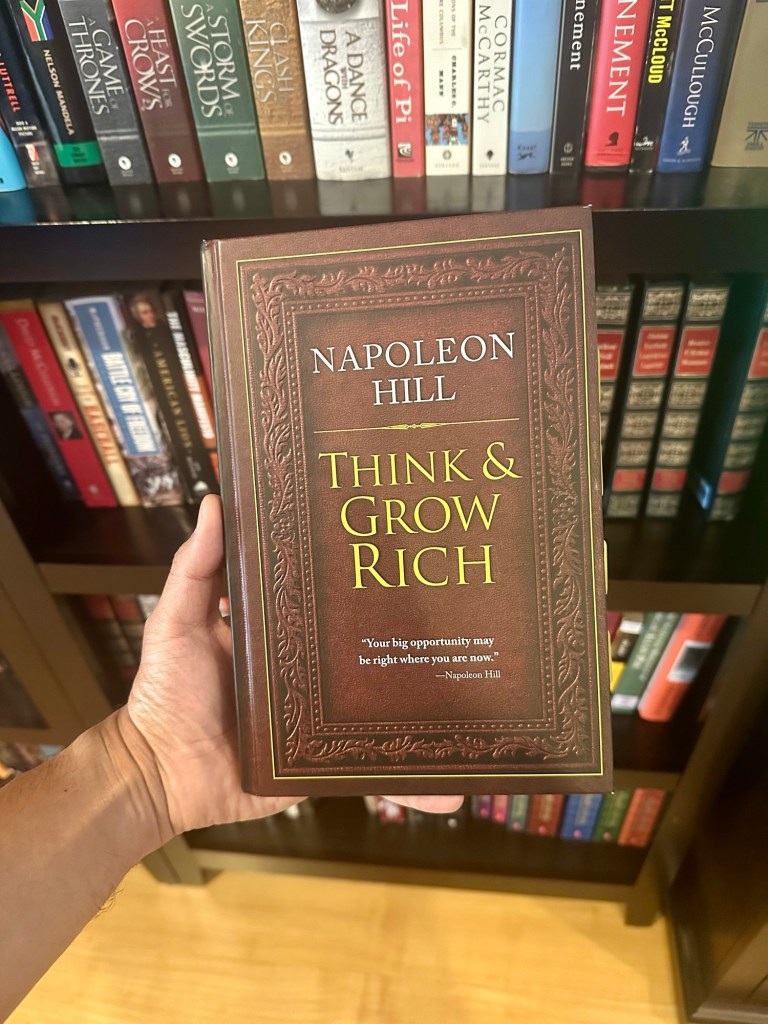
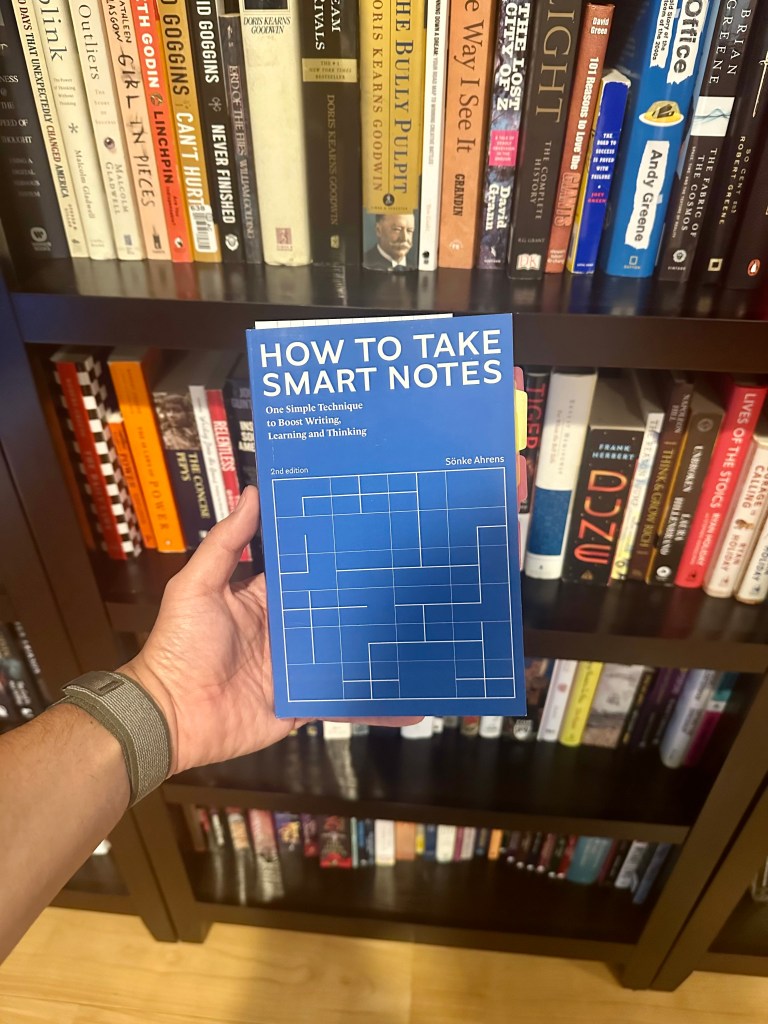
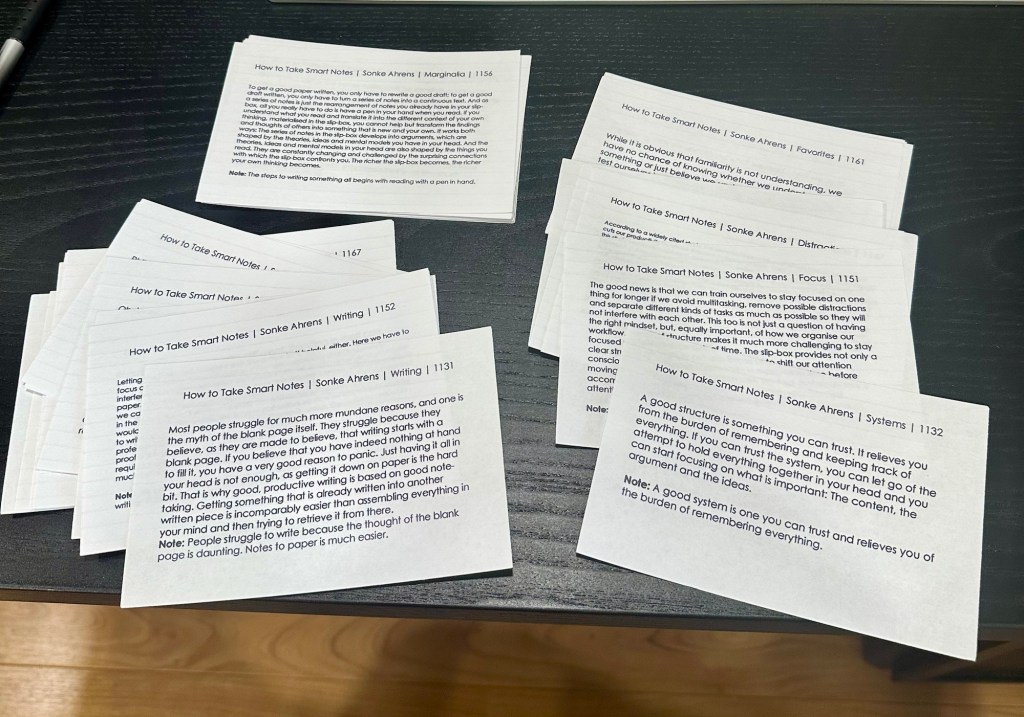
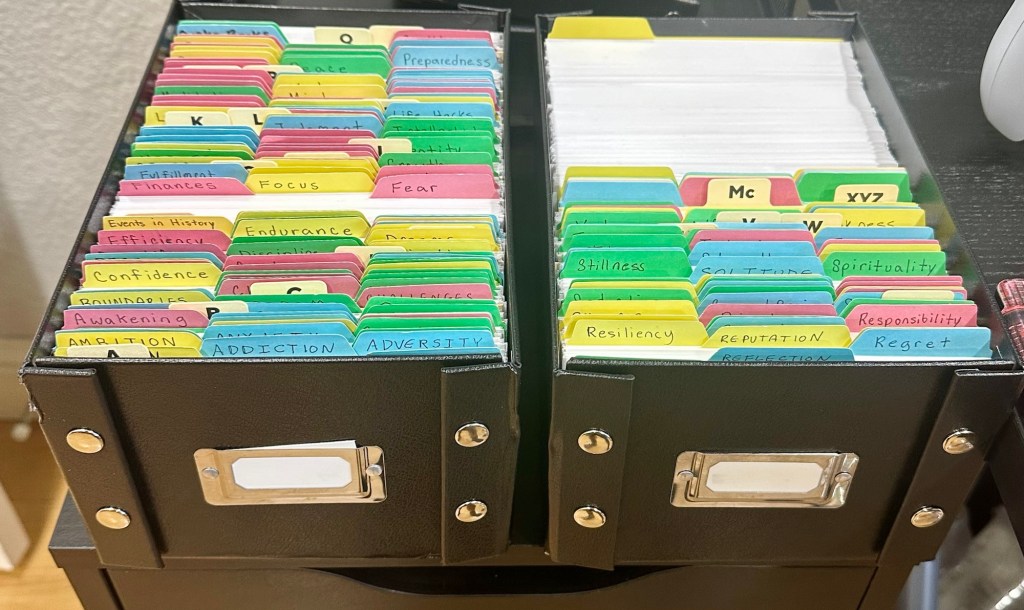

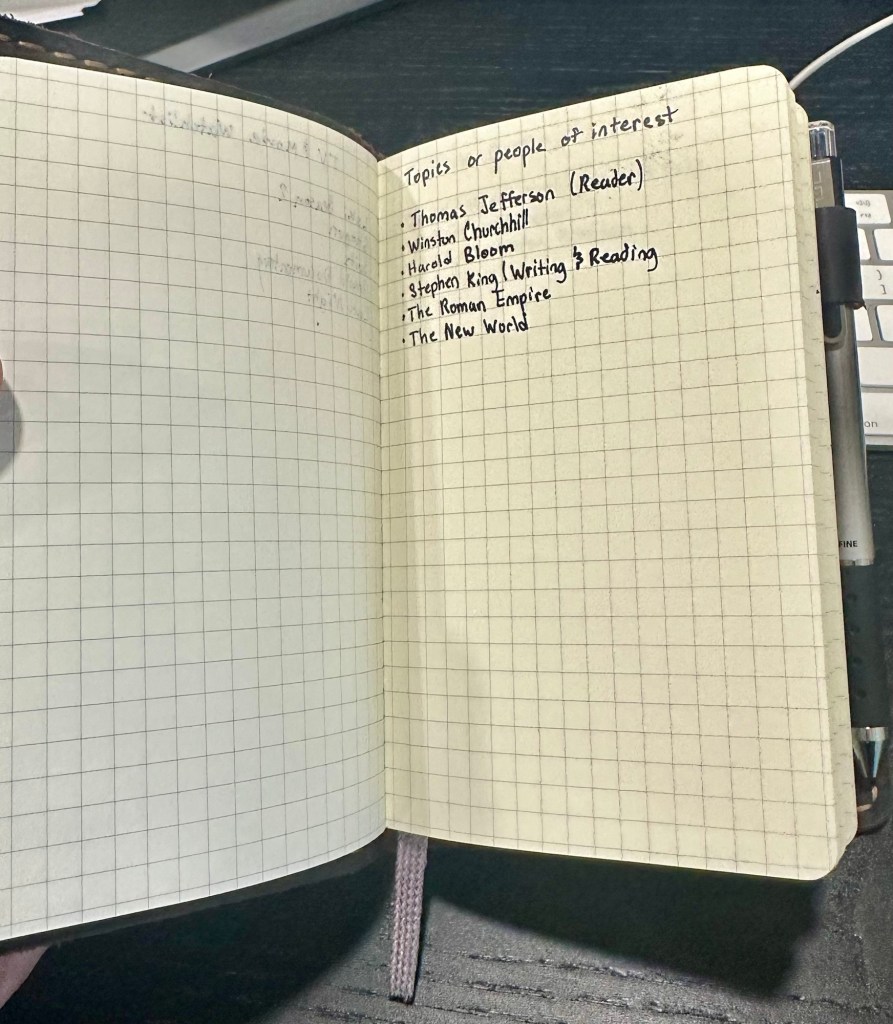
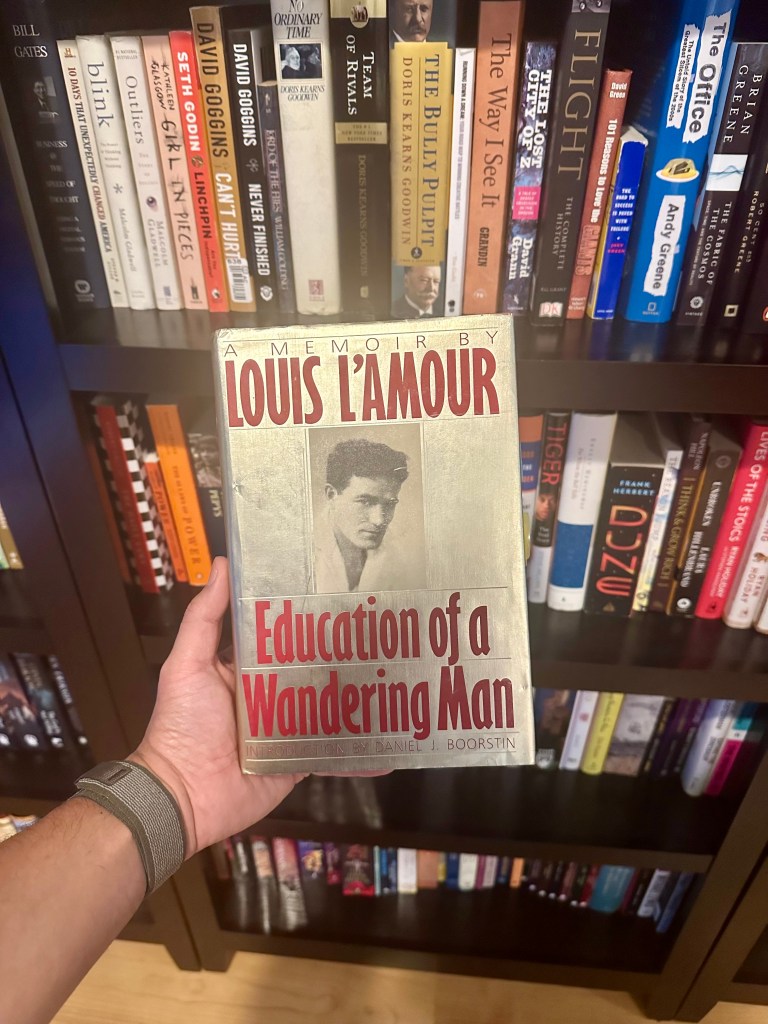
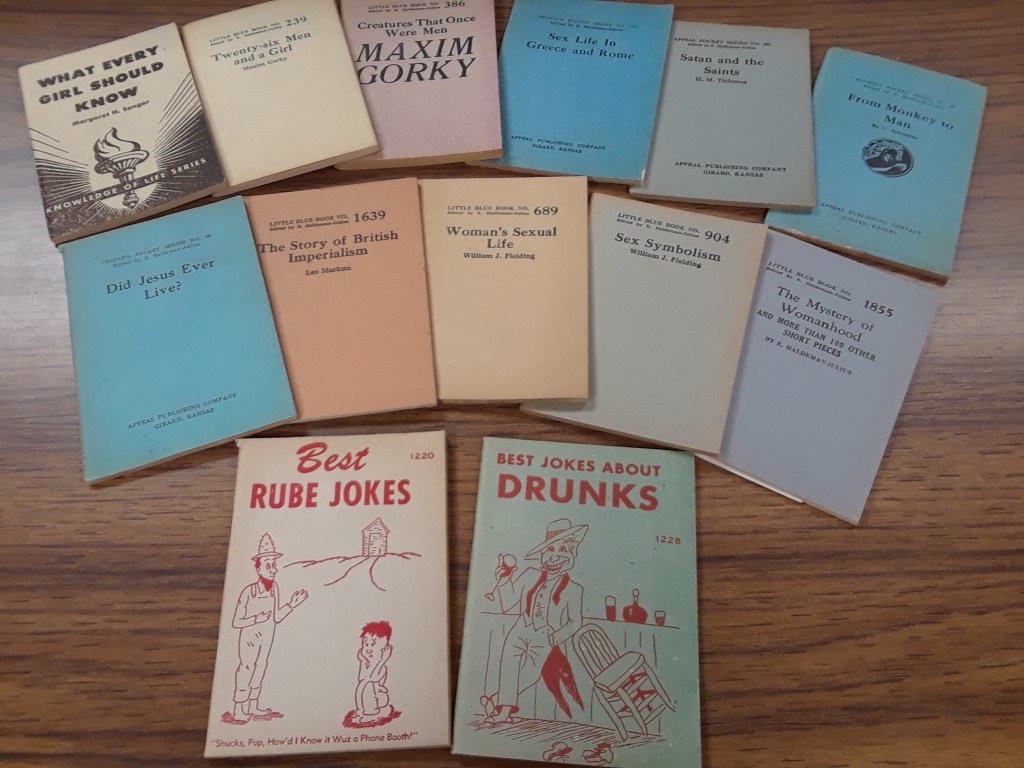
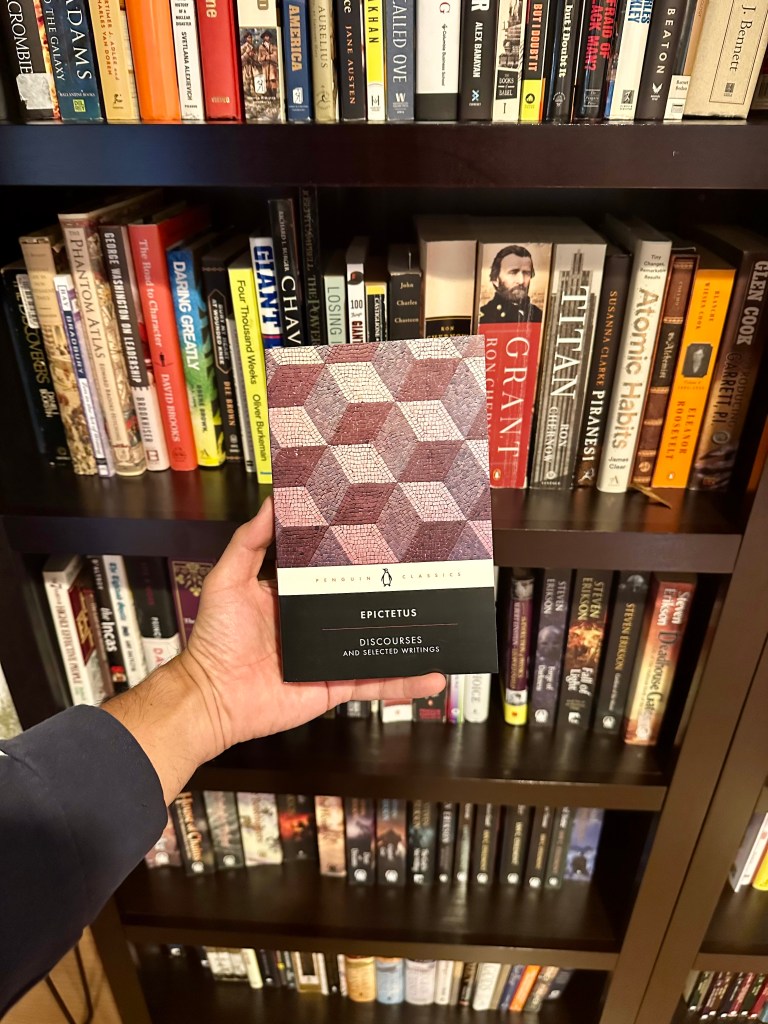
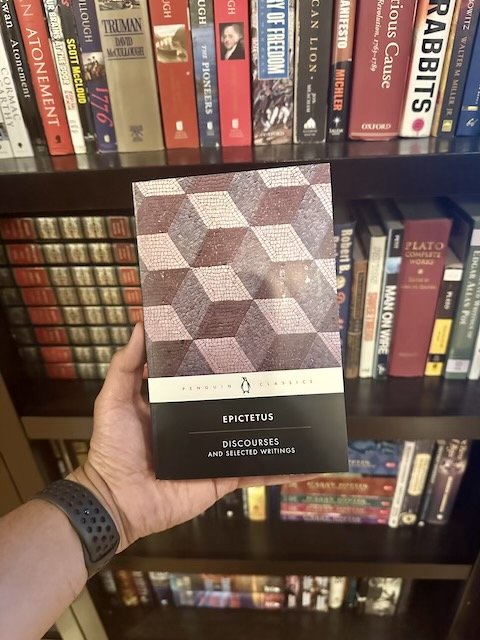
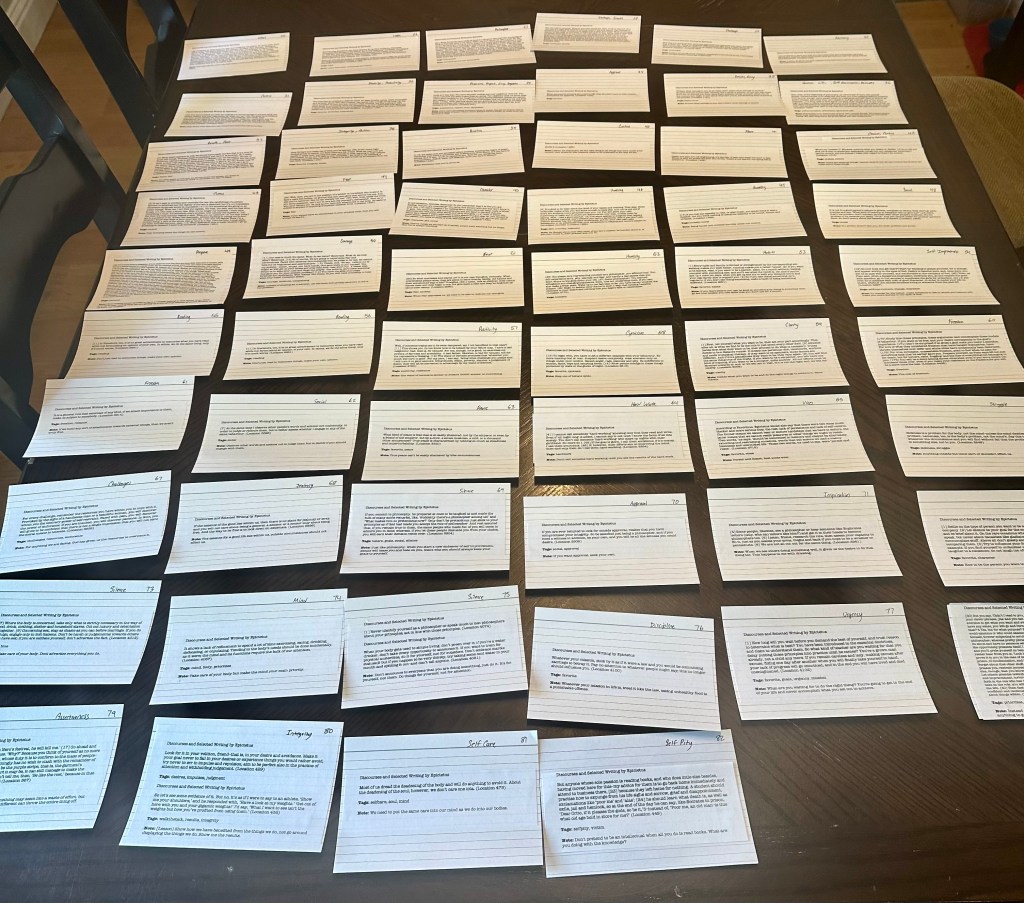


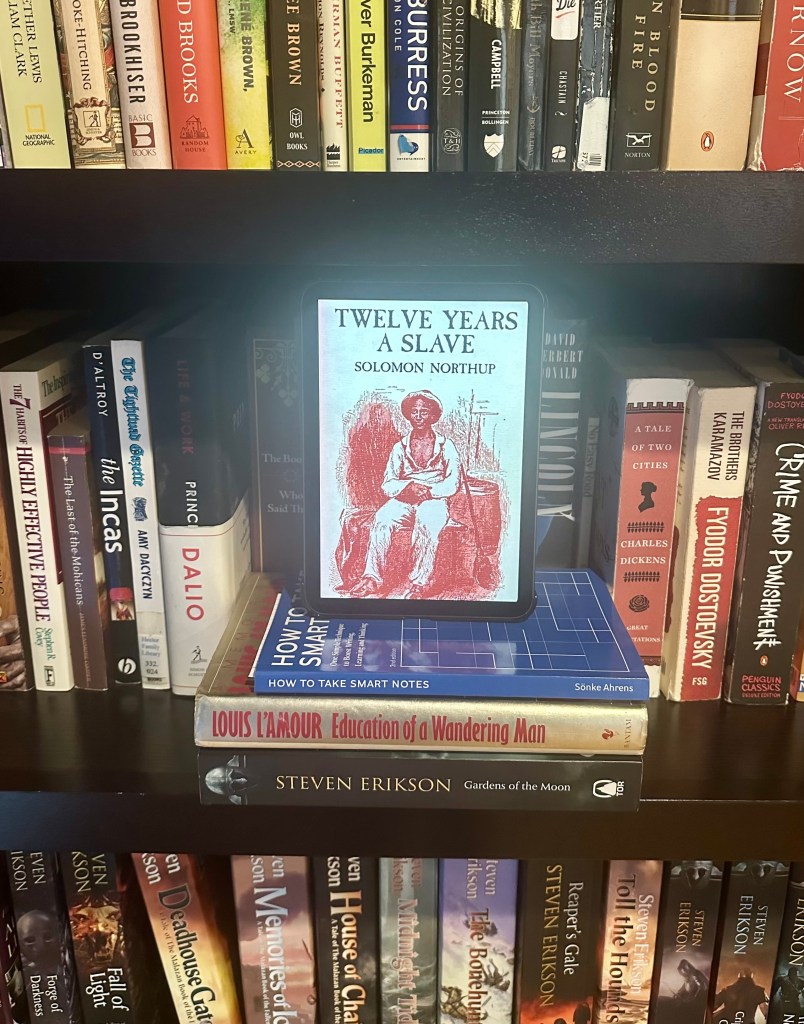


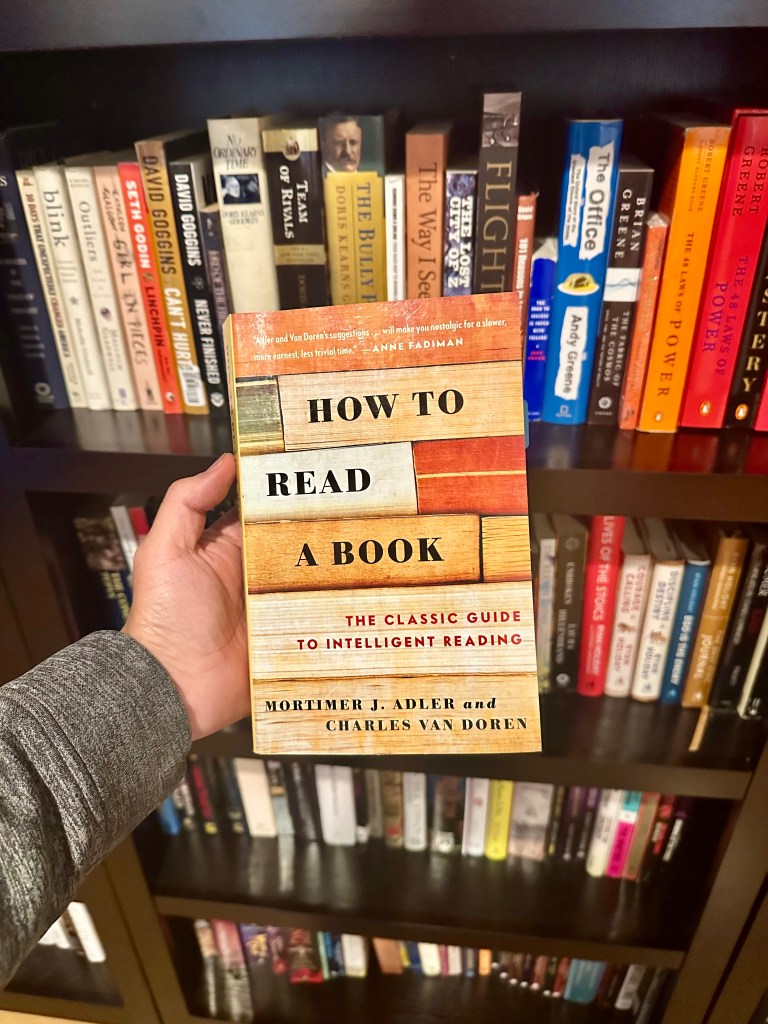
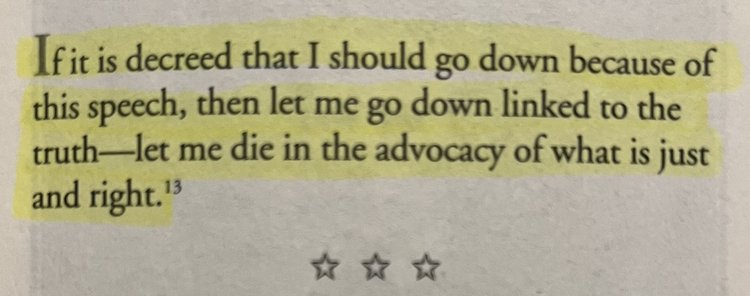
 Book Ponder