
- Think & Grow Rich by Napleon Hill
- Published: January 1, 1937
- Pages: 233
- Rating: 4/5 Stars
- Read: 3/3/2024 – 3/18/2024
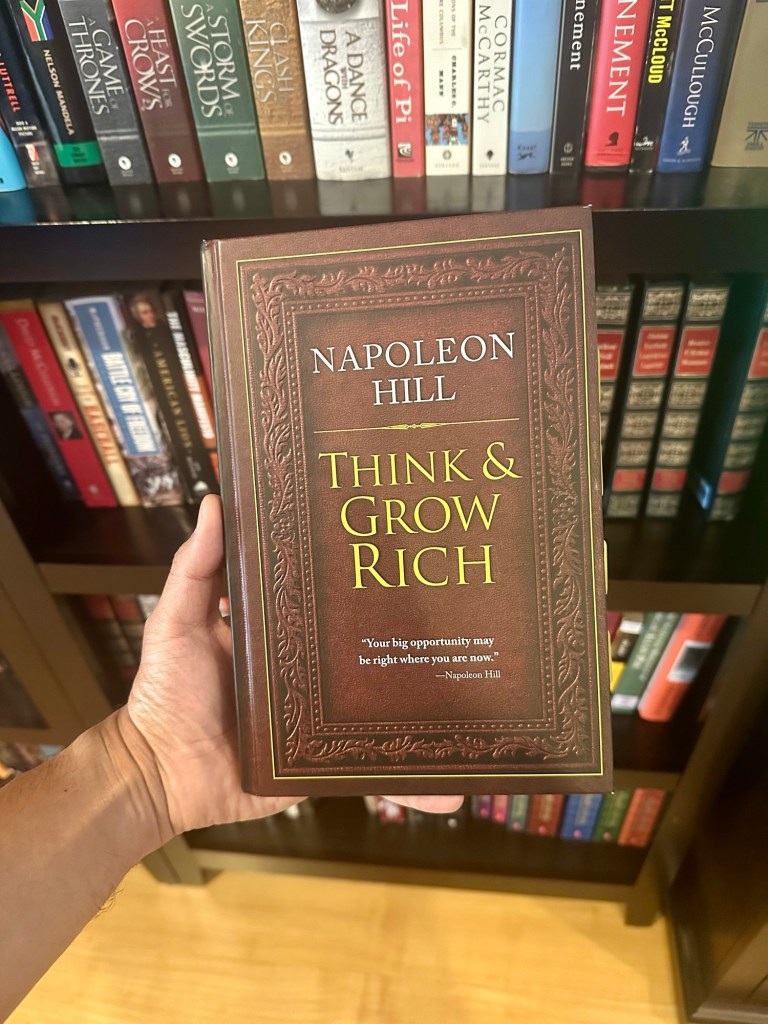
The Lessons Learned series is different than normal book reviews. There are hundreds of great book reviews for Think & Grow Rich, and I feel like I would be wasting your time creating another one. Instead, I strive to give you the lessons I was able to extract from the book to improve my life and perhaps yours.
Everything Starts with Mindset
Like in many self-help books, very little can be accomplished in the world of self-improvement without the proper mindset. The first flawed mindset is the familiarity with the word impossible. Hill expresses the flaw mankind has in spending too much time learning how something won’t work, instead of thinking nothing is impossible. Obviously, there are impossibilities but if you go back a few hundred years, many of the things that are possible today were considered impossible back then. If you go into something with the mindset that it’s impossible then it is guaranteed to fail, if you go with the open mind that anything is possible, you give yourself a chance. Which one do you think is the better option?
Hill coins the term “autosuggestion” when talking about mindset. He believes that it is the communication between the subconscious mind and the actions that we take. The subconscious mind cannot distinguish the difference between positive or negative thoughts, it just works with whatever we feed it, and that energy manifests in our conscious mind as a basis for our actions. That’s why Hill believes having the right mindset from the start will create a chain reaction that will lead to positive actions filled with courage instead of fear.
This may seem like a lot of work for our mind but let me reassure you that it’s not. Our minds are one of the most powerful things on earth and still cannot be replicated, we still do not know the limits to the human mind.
“There are no limitations to the mind except those we acknowledge, both poverty and riches are the offspring of thought.”
Napoleon Hill
Be Decisive and Act
Before any goal can be achieved, the dual evils of indecision and procrastination need to be conquered. Hill believes that where one is found, the other is usually around too. If you try to make any improvement in your life, this pair must be dealt with first. Hill says to “kill off this pair before they completely ‘hog-tie’ you to the treadmill of FAILURE.” If you try to achieve your goals while being indecisive and a procrastinator you will be on the fast track to failure. Once you come up with a plan to conquer procrastination and indecision you need to create a detailed plan of action for your goal.
Knowledge is powerful and will open you up to many insights in life, but if it isn’t accompanied by a plan, it’s just information. Hill believes that all knowledge we gain needs to be organized and directed through plans of action. A good example is for people trying to lose weight or become healthier. They may have the knowledge and the desire, but without a plan, they will be lost and wasting their time. Instead, they should create a detailed workout and eating plan curated for their goals.
The sneakiest way that procrastination affects us is by making us feel we aren’t procrastinating or giving us good reasons to procrastinate. The art of productive procrastination is the feeling that you aren’t quite ready yet and that more research is necessary. Instead of writing the article you go read more books, which makes you feel productive, but it’s an excuse to not do the work. The research has been done, you just need to push through and do the thing. Similarly, procrastination makes us wait for the perfect scenario or circumstances to do the work. I’ll tell you right now, the timing or circumstances will never be perfect, and if by some magical way you do end up in the perfect circumstance, those moments are so rare, that you will never complete anything if you are constantly chasing that moment. Just like being disciplined to stick to your habits every day regardless of how you feel, you need to do the same in acting on your creative endeavor. Put the reps in every day, regardless of how you feel. A great quote that I believed Joe Montana said but now I can’t verify it but fits into this topic perfectly regardless of who said it went something like this.
“I became great by being good for a very long time”
You don’t have to be your best every single day, but by overcoming procrastination and showing up every day, you can eventually create greatness. Be wary of procrastination tricks and be ready to overcome them.
At the core of being decisive and acting, is making tough decisions. The most difficult decisions will bring out procrastination and doubt quickly. In these moments instead of second-guessing yourself, acknowledge that the reason these decisions are giving you pause is because they have value. Hill believes that the more courage a decision requires, the higher the value of the decision. When facing something challenging tell yourself these are the moments where you go past the place where most people stop, if it was easy everybody would do it.
“The great decisions, which served as the foundation of civilization, were reached by assuming great risks, which often meant the possibility of death.”
Napoleon Hill
Become an Autodidact
This is a point I bring up in many of my articles. It’s a recurring theme that most of the great people in history knew the importance of reading and were autodidacts. A huge mistake people make is believing their education ends when their schooling ends, but I think that’s when your education has only begun. Grade school and College were your foundation to education, now that you have the basics, you are finally free to study and learn things you are interested in, at your own pace, in your preferred medium. Whether it means learning new skills to advance your career or pursuing interests for a side hustle, being a lifelong learner will keep your brain sharp, while not allowing yourself to become stagnant.
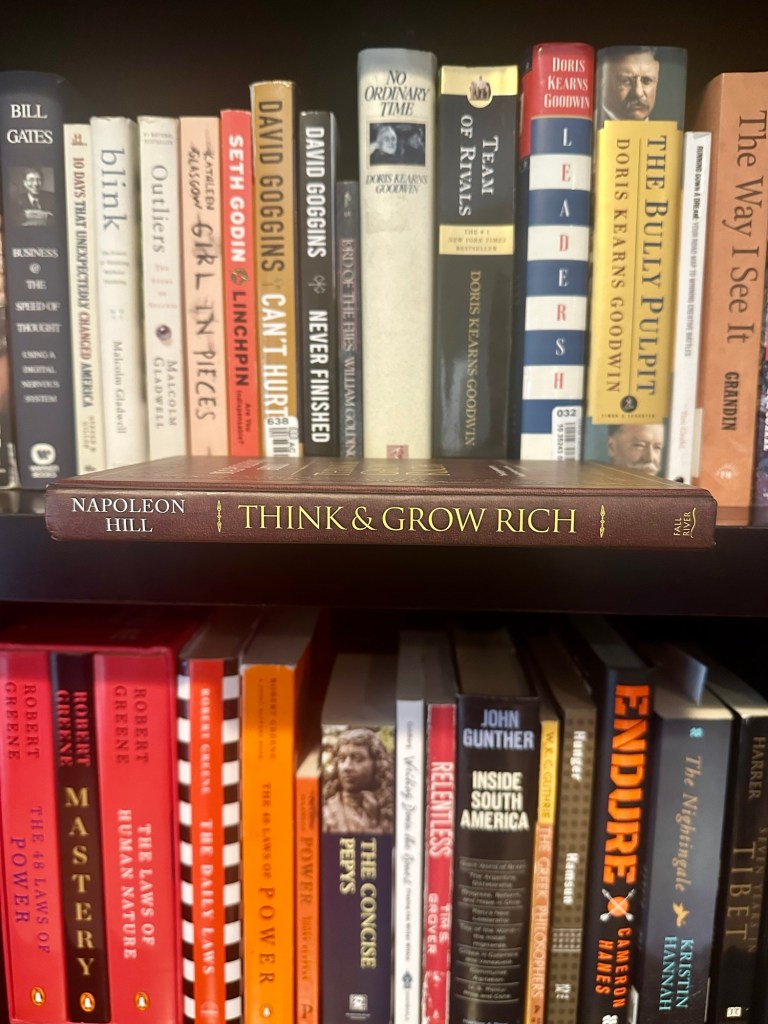
When I was going to Junior College in the mid-2000s, I had an interaction with an elderly man in his 80s that I can still recall like it happened yesterday. We were both waiting for our Chemistry class to start, and I was confused why someone his age would be taking classes at this age instead of enjoying his retirement. He must’ve seen the look on my face because he answered the question without me asking it. He said, “I bet you’re wondering why an old guy like me is wasting his time taking college courses.” After we got to talking, he told me that the world is full of wonderful things to learn about and that it would be a shame to spend the final years of his life letting his brain atrophy, when the mind has no limits. His body may fail him, but he would make sure to keep his mind active until the very last day as a way to pay back for the wonderful experiences it provided him in his life. Even though I was only 19 years old, from that day forward I became an autodidact. It is a decision that has brought great joy to my life and hope it is a great return on investment as I get older.
“The person who stops studying merely because he has finished school is forever hopelessly doomed to mediocrity, no matter what may be his calling. The way of success is the way of continuous pursuit of knowledge. “
Napoleon Hill
The first lesson once the choice to become an autodidact is made, is how to read properly. The holy grail of active reading is “How to Read a Book” by Charles Van Doren and Mortimer Adler. (I wrote my lessons learned from this book here). There are two major mistakes made in reading and they are somewhat contradictory. Someone who has been a reader for many years and has gained the skills required to read for knowledge will often be asked by other aspiring readers how to read or what books to read. While asking these kinds of experienced readers for advice is a good idea, sometimes the answers aren’t helpful for someone just wanting to get better at reading. An experienced reader may recommend you things they should be recommending to other advanced readers like great classic works or books that may be too difficult for new readers. On top of that they may recommend reading with a pen and paper, taking notes, highlighting, using notecards, summarizing, or whatever system they use. All of these may be too overwhelming for a new reader and are skills that are extremely valuable once you become an advanced reader. A better piece of advice if you are new to reading for knowledge is to read what you love until you love to read. If you go too deep too soon, reading will feel like a chore. Learn to love reading and as you become better at it, work on reading actively and absorbing knowledge from the books you read.
Have Clarity
A mistake people make when wanting to make positive changes in their lives is being too vague in what they want. Many people will make statements like, “I want to get in shape”, or “I want to run faster” but do not have a plan on how to achieve that goal. Our brains need clarity on exactly what you want and a plan on how to get there. No goal fails faster than one that lacks a plan. Whatever the positive change you want to make is, make sure it is extremely detailed and the plan you make to accomplish it must be detailed also. If you want to lose weight don’t just plan to “eat healthier”. You must plan exactly how many calories and what meals you are going to eat. This applies to any change not just health. The author emphasizes the need to be crystal clear on what you want in life.
“There is no hope of success for the person who does not have a central purpose or definite goal at which to aim at.”
Napoleon Hill
You Need Passion
The moments where your motivation runs out, you’re tired, and you are facing struggles, are the moments where you will quit if you don’t have passion for what you are doing. Passion is the thing that will help you push past the tough times. The easiest way to not have passion is to be doing something that you do not like. Before you go all in on something, ask yourself if you like it enough to push through the difficult times, because they will come, they always do.
You Need Mentors
Many of us don’t have the luxury of having great mentors guiding us in our lives. If you have this luxury then don’t let it go to waste, but for the majority of us that don’t, we have to create our mentors, and this was a practice that Napoleon Hill thrived in. One place where we can find mentorship is through books, books can serve as absent teachers. Hill built a cabinet of invisible counselors, formed by individuals who impacted him greatly in the books he read. Some notable names in his counsel that surpass fifty members now are Abraham Lincoln, Christ, Aristotle, Plato, Socrates, Homer, and many others. Hill used a meditation practice to have a counsel with his cabinet and they would advise him on things he was pondering. While this scenario may seem like too much for you, there is nothing wrong with gaining mentorship from people in history through books. A prime example is my dedication to being an autodidact from Abraham Lincoln and my ambition to achieve my goals from Lyndon Johnson. I never met these former presidents, but their stories of leadership in Doris Kearns Goodwin’s book “Leadership: In Turbulent Times” mentored me. While a real-life mentor is irreplaceable, we can still gain benefits from mentors who are no longer around.
Final Thoughts
If you are looking for the way Napoleon Hill teaches you how to “Think & Grow Rich” then I highly recommend you read the book for yourself instead. I gained many valuable lessons on mindset, decision-making, clarity, and passion, and there may be many lessons that can be gained for you too.
If you enjoyed this content, please sign up for our newsletter below, share this post with a friend, or read some of our other blog posts. Thanks for stopping by.
Disclosure: Some of the links in this post are affiliate links. This means that, at zero cost to you, I will earn an affiliate commission if you click through the link and finalize a purchase.
 Book Ponder
Leave a comment