Generosity can come in all shapes and forms. Many individuals blame their inability to be generous because of financial struggles, but generosity isn’t strictly based on money. We can also be generous with our time.
Helping a friend move, being there for someone who needs a friend. Next time someone asks for help, offer up your time, and you will be surprised how useful you can be without spending a penny.
When Emerson and friends started a magazine called “The Dial” he relied heavily on acquaintances he had built throughout the years. Emerson had a reputation for being generous and always helped write letters of recommendation, setting up authors with publishers, and opening the doors to his home to those in need. When he was in dire need of contributors for his magazine he relied heavily on these same individuals, and they repaid the favor. Early issues of The Dial are filled with works from Henry David Thoreau, Margaret Fuller, and many others that Emerson had been generous to throughout the years.
Your Good Deeds Will Be Rewarded
On July 24, 1872, Emerson’s home caught on fire. His neighbors rallied together to try to save his notebooks, books, and prized possessions. Late into the night books were being thrown out the second-story window as the firefighters put out the slow-moving fire. Once it was concluded that the house would have to be rebuilt, the community repaid Emerson’s generosity once again.
“The house would have to be rebuilt. Emerson had inadequate resources; he still debated heavily on lecture fees for living expenses. But thousands of dollars were raised now in Boston, Cambridge, and Concord to help the man and his family who had helped so many others.”
(Richardson, 1995)
Emerson’s lifelong generosity was a part of his character, and he never expected anything in return. That is most likely why it was paid back tenfold in his greatest time of need.
If you enjoyed this content, please sign up for my newsletter below, share this post with a friend, or read some of my other blog posts. Thanks for stopping by.
Disclosure: Some of the links in this post are affiliate links. This means that, at zero cost to you, I will earn an affiliate commission if you click through the link and finalize a purchase.
Processing…
Success! You're on the list.
Whoops! There was an error and we couldn't process your subscription. Please reload the page and try again.
Book Ponder focuses on the incredible power of reading, and even though stand-alone articles like these are unique ideas, I like to credit any books that inspired or gave me the resources for the idea.
Once a year, I’ll pick up a new book on writing to get my creativity flowing again and to see if I gain any new insights into the craft. While I gain some new tips and tricks, I will save you a ton of time and tell you most of the advice: You can’t become a good writer if you don’t write. The number one thing that will make you better at the thing..is doing the thing. It’s not surprising that this applies to almost all skills you want to improve.
The writing books are great, but they only show their true value once you consistently practice your writing. One of my favorite quotes by the great Louis L’Amour emphasizes this point perfectly.
“A writer’s brain is like a magician’s hat. If you’re going to get anything out of it, you have to put something in fire.”
Louis L’Amour
Reading the writing books is fine. Just make sure you are writing first.
The World Is Full of Ideas
Our world is an unlimited content source; you just have to slow down and look around. Today, however, it’s harder than ever to benefit from this because we live in a world of constant distraction. You carry a device with you at all times that constantly vies for your attention, with applications designed by some of the world’s most skilled engineers whose sole job is to keep you addicted.
You must find a way to free yourself from the resistance that wants you to fail and return to your phone to doom scroll your precious time away. I won’t go into too much detail on how to break a phone addiction because it’s different for everyone, but I will recommend Digital Minimalism by Cal Newport.
There are always interesting things happening around you. If you take the time to look around and absorb them, you will generate more ideas than ever. Just be ready to write them down before you lose them.
Your Thoughts Have Value
Think of all the books, articles, movies, documentaries, and podcasts you have consumed or interesting experiences in your life. These memories are sitting in your brain somewhere, and while the actual memory may be blurred or inaccurate, your brain most likely created an idea from it. Sometimes, you must allow yourself to sit with your thoughts to encourage these ideas to come to the forefront.
Unfortunately, this requires us to be bored, and as mentioned earlier, boredom has been almost eradicated from society. If you grew up before smartphones, you remember when standing in line, going on long drives, or walking somewhere, which allowed our minds to wander and gave us new ideas. This is an extremely valuable skill that is slowly disappearing, and if you can harness it, it can give you ideas for your writing.
Many great intellectual people in history credit long, undistracted walks as the solution to many writing struggles. Recently, I read Stephen King’s memoir “On Writing,” and he talks about figuring out the ending to The Stand and how he would go on long walks to work through ideas in his head. On one of these long walks, the idea came to him, and unfortunately, he wasn’t carrying anything to write with, so he had to sprint home before the idea left him. He finished the book several weeks later after almost giving up on it.
There are countless stories similar to these. Rockefeller’s long walks to the office and back gave him business strategies that led him to become an oil tycoon. Ralph Waldo Emerson went on long walks to come up with lecture ideas. Marcus Aurelius credited long walks to work through difficult decisions as the emperor of the most powerful nation in the world.
If one of the most prolific authors in recent memory and a great emperor who left a legacy that has lasted almost 2000 years benefited from their thoughts, then so can you.
You Don’t Need An Interesting Life To Be a Writer
Roland Allen’s book The Notebook focuses on the history of notebooks and their uses. In it, he discusses the fact that people who had interesting lives wrote less in their journals, and sailors who had nothing to do during their downtime during long voyages were the most prolific writers.
Perhaps it’s because the sailors had more free time, but that shows they also had time to be bored and think, which brought them ideas to write about. Many sailors created business strategies or elaborate plans for what they would do once they landed and were excited to get to work after the voyage.
I don’t want you to think you have nothing to say because you don’t live the most exciting life. We already have the most valuable tool for writing: our brain. Just give it the tools to do the work.
Don’t Become A Writer If You Aren’t Willing To Read
Reading books is the most important skill for becoming a better writer outside of writing. The more books you read, the more you will gain the ability to distinguish between good and bad writing and also learn new styles of writing. You can use this same skill set when editing your writing. As a bonus, reading is an incredible idea generator; combined with your thoughts, it can be the push that generates truly unique ideas or improvements on pre-existing ideas.
“If you don’t have time to read, you don’t have the time (or the tools) to write.”
Stephen King
The best way to spend more time reading is to dedicate more of your leisure activities to reading. Replace circumstances where you get on your phone to pass the time and read a book instead. Earlier, I stated that technology was a crutch to writing, but if we are smart, it can become a tool, especially with reading.
Carrying a book with you is cumbersome, but now you can always have your books on your devices. Replacing social media apps with the Kindle app will increase your reading tremendously.
Don’t Become A Writer If You Aren’t Willing to Work Hard
This advice applies to any endeavor you want to improve in. What’s the point if you only give half an effort? You’re better off using those resources elsewhere because I can guarantee that mediocre effort in writing will never produce great results.
“But if you don’t want to work your ass off, you have no business trying to write well—settle back into competency and be grateful you have even that much to fall back on.”
Stephen King
Be ready to put in the hard work. Perhaps writing isn’t for you if it doesn’t feel worth it. You still need to find what you are passionate about. Nothing is wrong with that, but if you are truly passionate about something, it won’t always feel like work, and when it does, you can push past it.
Learn to Read and Write in Small Spurts
Nothing beats long, undistracted reading and writing sessions. But let’s be real: we don’t live in a perfect world, and life can make it feel like we will never find the time to become a writer. This is when you need to be strategic and learn to read and write in small spurts. As stated earlier, technology is a huge help with this. Do some writing on the notes app on your phone during breaks throughout the day. Listen to audiobooks on your commute. Nothing beats dedicating time to your craft, but you need to be able to supplement it with tools when life gets in the way.
One of my favorite anecdotes is the author Louis L’Amour talking about how he would manage to read more.
“Reading is the creative center of a writer’s life. I take a book with me everywhere I go, and find there are all sorts of opportunities to dip in. The trick is to teach yourself to read in small sips as well as in long swallows. Waiting rooms were made for books—of course! But so are theater lobbies before the show, long and boring checkout lines, and everyone’s favorite, the john.”
Louis L’Amour
I didn’t want to say it myself, but if L’Amour did, so can I. Stop bringing your phone to the bathroom and bring a book instead! Just don’t loan that book to your friend when you’re done.
If All Else Fails…
If all else fails and you still have nothing to write about after applying all these tips, then write about having nothing to write about. You will be surprised to find that you end up writing about something.
Writing is hard, but the rewards are immense. I encourage you to keep pushing forward!
If you enjoyed this content, please sign up for my newsletter below, share this post with a friend, or read some of my other blog posts. Thanks for stopping by.
Disclosure: Some of the links in this post are affiliate links. This means that, at zero cost to you, I will earn an affiliate commission if you click through the link and finalize a purchase.
Book Ponder focuses on the incredible power of reading, and even though stand-alone articles like these are unique ideas, I like to credit any books that inspired or gave me the resources for the idea.
Processing…
Success! You're on the list.
Whoops! There was an error and we couldn't process your subscription. Please reload the page and try again.
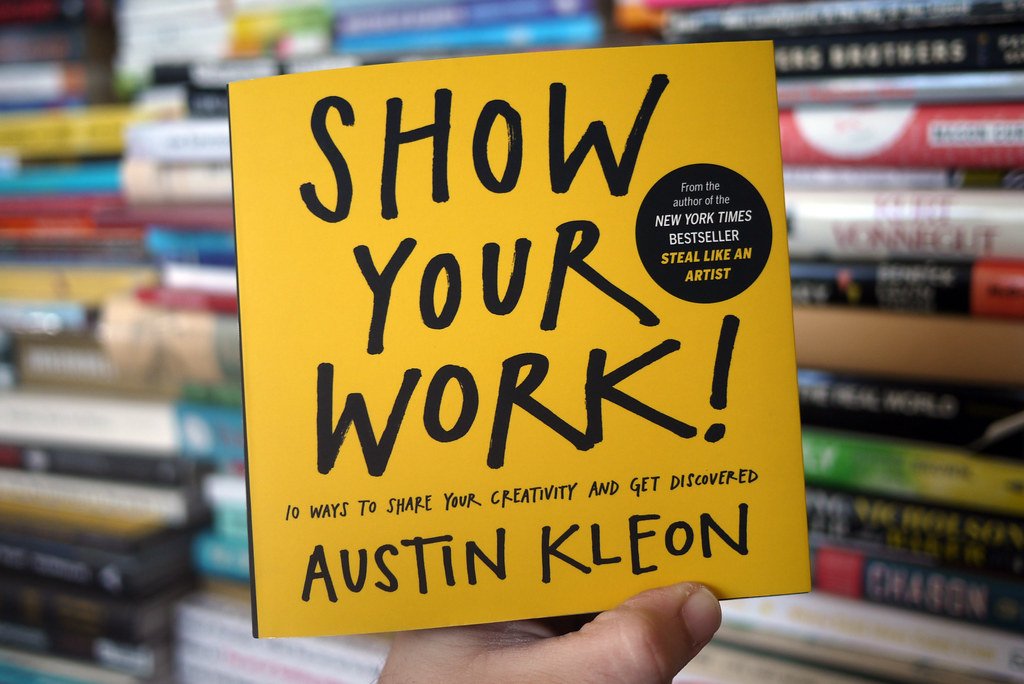
I want people to read my blog, I want people to subscribe to my newsletter, and I want to be followed on Instagram. These are all similar goals for anyone creating content, but why do we deserve to have fans when we aren’t fans first? This is an issue I am dealing with right now trying to grow my website and write about my passion. I want to gain readers and have people sharing my blog, but am I doing this for others?
If you want fans, you have to be a fan first. If you want to be accepted by a community, you have to first be a good citizen of that community. If you’re only pointing to your own stuff online, you’re doing it wrong. You have to be a connector. The writer Blake Butler calls this being an open node. If you want to get, you have to give. If you want to be noticed, you have to notice. Shut up and listen once in a while. Be thoughtful. Be considerate. Don’t turn into human spam. Be an open node.
When we start being fans of others we begin to learn about the ideas that make us fans. We realize the attraction certain websites or newsletters bring to us and we begin to implement those skills into our own content creation.
How to Become a Fan
Comment on other content creators in your niche. This will help you build relationships with others in your same field.
Read books and write reviews from authors that inspire you.
Share content that is valuable to you and can bring value to others.
How to Get Fans
Create quality content. Quality over quantity. No one wants to read your 75 mediocre articles, but I guarantee that if you write an exceptional piece, people will subscribe, and be willing to wait for the next great piece of content.
Communicate with your audience. When you are starting out you must be judicious in responding to comments or emails. A new fan that sees you interacting with him and answering any questions, will be a fan that continuously returns to your website.
Be grateful. If someone shares or reviews your content, be thankful for it. Starting out those initial promotions can be the edge your content needs to increase in popularity.
Final Words of Advice
If you are passionate about what you are creating you won’t quit when times get tough. In my situation, I love to share what I learn from reading, and I know I will enjoy it for the rest of my life. If it takes years for my website to take off, I won’t mind, because I am doing something I love!
Processing…
Success! You're on the list.
Whoops! There was an error and we couldn't process your subscription. Please reload the page and try again.
That moment when something clicks, when you get excited about a thing, some may call it the “aha” moment or the “light bulb” moment. These are the moments when you need to drop everything and allow whatever is causing this feeling to guide you. It could be reading a topic that is resonating with you or creating something that gives you an unmatched feeling of excitement. These are the tiny moments that bring you closer to finding your passion; they can’t be ignored. Your mind can almost sense that you’re on the verge of something great. It feels like a higher level than the flow state, and usually, something great or unique comes from it.
When Ralph Waldo Emerson returned from Europe, he had a similar feeling where all his ideas and insights came together as one to create something great. Richardson Jr. describes the moment for Emerson.
“A whole series of ideas, impressions, insights, convictions, and readings all ran together like a series of streams into a river. The process was a confluence because it was not so much a change of direction as an augmentation.”
(Richardson, 1995)
Many of these moments are lost to us if we are constantly in a state of distraction. Great ideas came to people when they were going on walks, waiting in line at the grocery store, or just sitting outside enjoying nature. Sadly, these moments are far and few between. At the slightest hint of boredom, you go for your smartphone to give you a dopamine hit, instead of sitting in boredom. The word boredom has a bad reputation, but it’s a skill that allows us to focus on one thing for long periods. If you can sit with your thoughts with no distractions for long periods, you will find that you can also focus on a task for long periods, they are the same skill. Practice allowing yourself to be bored every once in a while.
Emerson’s many moments where he felt inspired to carry on with his work came from moments where he was alone with his thoughts for long periods. He tells of the story of his friend Jones Very, who gained encouragement from a train ride.
“In August of 1837, Very was riding a B & M train from Boston to Lowell when he was suddenly struck by a sense of terror at how fast he was moving through the countryside. The terror subsided when he realized that he habitually stood “amid movements far more worthy of alarm yet with perfect safety.” Exalted now by the sense of being in God’s care and by a simultaneous “sense of man’s power and gifts,” he felt himself “borne along by a divine engine and undertaking his life-journey.” The trip “passed on for a while as without time.” When he returned from the trip he felt purged, exhilarated, and encouraged in his seeking.”
(Richardson, 1995)
James Very would never have had this moment of enlightenment if he spent the entire train ride doom scrolling on his phone or watching a movie. I’m not saying to be bored all the time but give yourself a few moments every day and one longer session once a week. The benefits will pay off when it’s time to focus on something important.
Richardson Jr. would go on to emphasize that Emerson believed moments, not events, were the turning points in a life. Your moment will come, just try not to miss it because you’re distracted by something else.
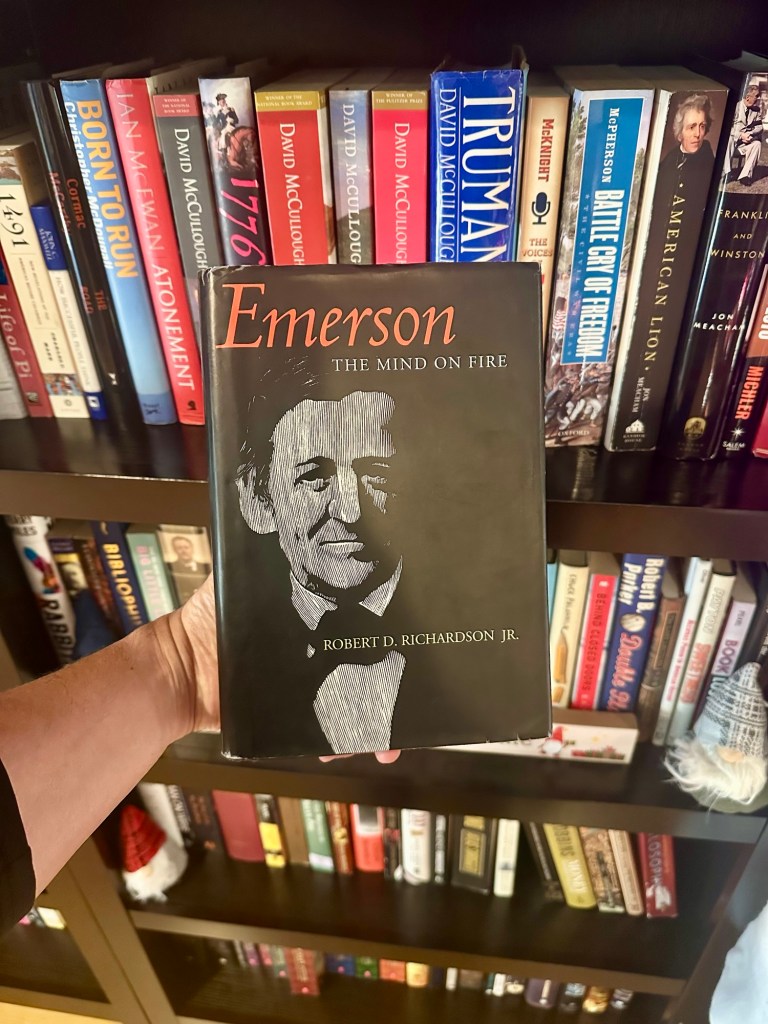
Book Ponder focuses on the incredible power of reading, and even though stand-alone articles like these are unique ideas, I like to credit any books that inspired or gave me the resources for the idea. Emerson: The Mind on Fire by Robert Richardson Jr. is one of my favorite biographies and was the main inspiration for this post.
We all know that fool because it might be you. They are always preparing to do the thing. They’ll start the workout routine on Monday, the first of the month, or at the new year. How much time has been wasted in the history of mankind by waiting to start? How many masters of their craft have been lost to the time-sucking act of getting ready to do the thing?
Acknowledge That Life Is Short
Once we acknowledge that life is short and we must find a balance to achieve our goals, we face the dilemma of always “getting ready” to do the work. There will always be one more thing you need to do before you can start: you need the weather to clear up a bit before you can start to work, you need a better setup before you can start your writing, you need things to slow down a bit more at work so you can start your side hustle.
Start Right Now
That one more thing will always be there, but today can be the day you put your foot down and decide to start right now. It doesn’t matter how unprepared you feel; it’s still better to just start. The perfect circumstances will not show up at your doorstep on their own for you to finally get started. If that perfect situation does present itself to you, you will end up chasing that moment forever and relying on it to do any work. Start today, and stop making excuses. Every day that you wait is a time that you will never get back. As Ryan Holiday says, sometimes the work will feel like torture, but it will be worth it.
If you enjoyed this content, please sign up for my newsletter below, share this post with a friend, or read some of my other blog posts. Thanks for stopping by.
Processing…
Success! You're on the list.
Whoops! There was an error and we couldn't process your subscription. Please reload the page and try again.
As we approach 2025, I try to spend December planning ahead and pondering my reading goals for the following year. Usually, I’ll pick a few books I want to reread, a daily devotional, and perhaps some new releases that I’ve been waiting for.
My goal is usually 52 books, and I tend to read at least over 30, so I plan around 25 to 30 books and leave a couple of open spots for books I may spontaneously find out about next year and want to read. I do have five already picked out that I am excited for in 2025.
After reading Over the Edge of the World by Laurence Bergreen, I suddenly desired to feel that feeling of exploration that the sailors on the Trinidad experienced over five centuries ago. I was intrigued by the different tribes they ran into in far-off islands and became curious about how Australia was discovered and if indigenous people were already living there. I’ve seen the Fatal Shore on a few reading lists over the past few years, and it seems to be the best book on the founding of Australia.
If you know anything about me, you know I’m a big notebook guy. Carrying a commonplace book and practicing writing things down when ideas come to me has been one of my most beneficial habits. It has generated many great ideas for my writing and personal life while helping me remember things and find peace by cataloging important life events.
This year, I found a great book by Roland Allen called “The Notebook” about the history of notebooks and their uses. It was an awesome read going through the evolution of notebooks and how they were used in many different ways. This made me curious about the history of books and papers in history. Papyrus is the book I discovered that has great reviews and seems to cover all the topics I am curious about.
I’ve been putting Lonesome Dove off for too long. The reason for the long delay is that I try to physically read all of my nonfiction books and use audiobooks for fiction books, as I consider them a leisure activity, and Lonesome Dove is a whopping 960 pages. Unfortunately, the narrator for Lonesome Dove is a tough listen, and if you read the Audible reviews, it has turned many people away. This year, I am deciding to read it anyway and find out how great this book is.
I attempt to read at least one book exclusively on my craft a year. In past years, On Writing Well by William Zinsser, Zen in the Art of Writing by Ray Bradbury, and The War of Art by Steven Pressfield have had a massive impact on my writing, and I have gained valuable skills from those authors.
Why not learn from arguably the greatest horror author of all time?
Plutarch’s Lives has been calling my name for many years. Great men like Julius Caesar, George Washington, William Shakespeare, and Ralph Waldo Emerson have read it. I should have read it sooner if they credited much of their success to this book.
I look forward to discovering this book’s insights that have made great individuals throughout history return to it.
Reading in 2025
It’s always exciting to start the year with a reading plan, and it helps me stay accountable to my priorities and goals. Every year, I am surprised by how much time there is to read if you look hard enough. In 2025, I plan to continue working on lowering my screen time, using downtime to read or listen to an audiobook, and dedicating one hour of my day to uninterrupted reading time.
If you spend time auditing your day and eliminating wasted time, there is no reason you can’t read at least one book a month. Let me know if you have read or plan to read any of the books on this list and what you think about them.
If you enjoyed this content, please sign up for my newsletter below, share this post with a friend, or read some of my other blog posts. Thanks for stopping by.
Disclosure: Some of the links in this post are affiliate links. This means that, at zero cost to you, I will earn an affiliate commission if you click through the link and finalize a purchase.
Processing…
Success! You're on the list.
Whoops! There was an error and we couldn't process your subscription. Please reload the page and try again.
I had only heard of Louis L’Amour in passing as an author of old western novels. After listening to an interview with his son on the Art of Manliness podcast, I resonated with the life of Louis L’Amour, and even though it feels far-fetched, I felt like that is the life I would have lived if I lived in the same era as him.
I love that L’Amour spent most of his youth traveling the country and working odd-end jobs while voraciously reading anything he could get his hands on. Eventually, when he became a successful author, he used all the experiences from his youth to fuel his stories. I loved Louis’s dedication to reading and his sacrifices to ensure he had plenty of books to read.
I’m not a big Western guy, but The Education of a Wandering Man was my favorite read of 2024.
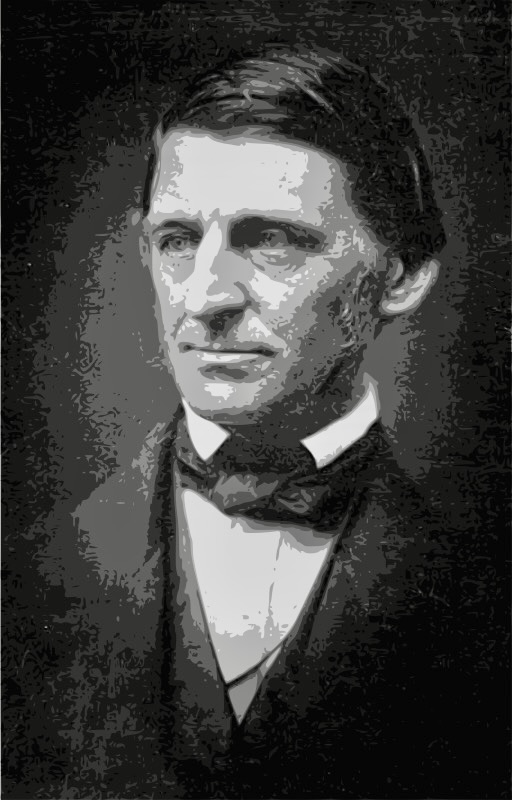
As I resonated with Louis L’Amour in his era, I lived vicariously through Ralph Waldo Emerson in his amazing biography by Robert D. Richardson. Emerson pioneered many of the autodidacts and knowledge management tools we use today. He prioritized deep work sessions to work through complex ideas. He knew the power of walking and used it as an idea generator. He wrote down any ideas that came to him and carried a commonplace book with him from a young age.
These are all tools and skills that are more important today than ever.
Emerson’s life had many different phases, and you can see it through his journal entries; as his mind matured and evolved, so did his beliefs. Richardson does an incredible job of guiding us through the life of a literary genius; the title does it justice.
Emerson’s mind was on fire, and witnessing it was an enjoyable journey.
I am always intrigued by how much harder highly successful people work than the average Joe. I consider myself an above-average productive person, but when I read biographies of individuals in history with an insatiable will to be successful, I am floored by the sacrifices and pure energy they poured into their craft.
It consumed them, and John D. Rockefeller was one of those men. His work ethic was second to none, and by sheer will, he created the richest business the world had ever seen.
Ron Chernow does a great job in guiding us through the controversial history of Standard Oil and the monopolistic strategies they used to control the oil industry for decades. He looks at Rockefeller’s philanthropic work and how he spent most of his post-Standard Oil life giving away most of his money. He also gives us an in-depth look at the dirty work Standard Oil participated in and if Rockefeller truly was oblivious to it or was a master and letting others do his dirty work.
Regarding work ethic and ambition, no one comes close to Rockefeller.
I’ve had Over The Edge of the World sitting on my bookshelf for years, and I regret not reading it sooner. Bergreen does an excellent job telling the story of Magellan’s daunting journey with his crew across the world to find a strait through South America to the Spice Islands.
We get an inside view of the intense rivalry between Spain and Portugal in the Age of Discovery, the impact of scurvy on long voyages, the constant threat of mutiny that captains had to manage, and witnessing firsthand accounts of the difficulties of discovering new lands with inhabitants that had very little contact with the outside world.
I must credit Ryan Holiday, Brandon Sanderson, Cal Newport, and Steven Erikson as the authors who renewed my love for reading as an adult. I try to repay the favor by pre-ordering and reading any new books they release. I didn’t think I would find a better daily devotional book than The Daily Stoic, but I believe Ryan Holiday surpassed himself with The Daily Dad, especially if you are a parent.
As I have a 10-year-old son, when writing this, the Daily Dad taught me to be patient, present, and enjoy the ride of being a dad. Having a son is the greatest blessing of my life, and after reading the Daily Dad, I plan to enjoy every second of it because it doesn’t last forever.
This is my go-to gift for other fathers I know.
The 2024 Year In Review
2024 was another great reading year for me; even though It looks as if I’m only going to read around 35 books this year from my usual goal of 52, I noticed my reading skills continued to improve, and I gained the most value I have ever gotten from my reading.
Most of the books I read were 500 to 900 pages, and I am proud to have read them all deeply, taking extensive notes, and extracting as many lessons as possible to apply to my life.
I hope you pick up one of these books in 2025, and if you have read one of them already, let me know what you think.
Happy Reading!
f you enjoyed this content, please sign up for my newsletter below, share this post with a friend, or read some of my other blog posts. Thanks for stopping by.
Disclosure: Some of the links in this post are affiliate links. This means that, at zero cost to you, I will earn an affiliate commission if you click through the link and finalize a purchase.
Processing…
Success! You're on the list.
Whoops! There was an error and we couldn't process your subscription. Please reload the page and try again.
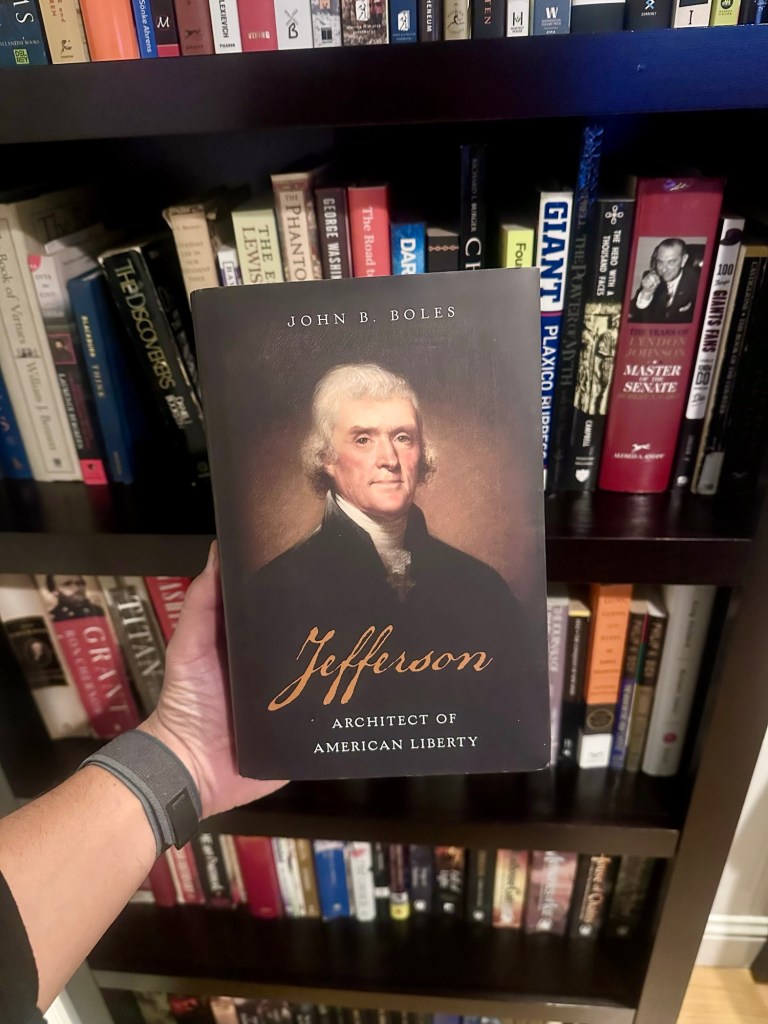
Thomas Jefferson is a controversial figure in American history. He accomplished great things as a founding father and made sacrifices for the country he loved. Even though judgment should be withheld in certain aspects of history because they were a product of their time, other moments, like the holocaust and slavery, are never acceptable, regardless of the time period. With Jefferson, it becomes complicated because, like many of the other founding fathers, if he followed suit and never went against slavery, then he would be lumped in with everyone else as a product of their time. Unfortunately, Jefferson is looked at as a hypocrite because, on the one hand, he fought for abolition but continuously used slaves at Monticello. He eventually fathered multiple children with a slave named Sally Hemings but never took a fatherly role over them. Jefferson did treat his slaves well, and I think he believed that by keeping them under his service, he was giving them a better life until a better alternative was available. While this may be true, he should have allowed his slaves the freedom to choose for themselves.
John Boles does an excellent job writing about Jefferson in a positive light, and it gives us a different viewpoint on his complex life. As I read, I consistently went back and forth on my opinion, and by the end, I concluded that Jefferson was a good man with good intentions and clouded judgment. It’s a shame because if he had freed his slaves in his will, he could have redeemed his image, but I believe his financial troubles towards the end of his life kept him from doing that for fear of leaving his family in an even bigger financial crisis.
The Lessons Learned series is different than standard book reviews. There are hundreds of great book reviews on Thomas Jefferson, and I would be wasting your time creating another one. Instead, I strive to give you the lessons I was able to extract from the book to improve my life and yours.
Creating A Sect of Your Own
For most highly intellectual people, religion becomes a complicated topic because they think objectively. For things to make sense, they need facts and impartial proof. They tend to move past the church and community aspect of religion and focus on a personal relationship with God because that’s where they see the majority of its value.
Jefferson viewed himself as a disciple of Jesus’s doctrines. He then created his own modified version of the Bible, a pamphlet containing what he believed were its most important and valuable parts.
“Jefferson considered himself neither an atheist nor an enemy of Christianity but an authentic Christian, defined as a follower of Jesus, not the church.”
John Boles
I agree that going to church and praising God has an important community aspect, but it feels more like an entry point into religion. If you are new and not well-read, a community can help guide you. The more intellectual you become, the less you need church and the more time you spend focusing on your personal relationship with God. This can apply to any religion; we are just using Christianity since this is the religion Jefferson followed.
Just like you modify tools and systems to work for you as you become an expert in anything, you should do the same thing for religion. Create a sect of your own that works best with your intellectual level in order to bring yourself the most value from whatever religion you follow.
The Importance of Duty
One of the most shocking things I learned about the founding fathers is that many of them hated being in politics, and if it was up to them, they would retire to their homes peacefully, read books, and spend time with their families. Yet over and over again, duty called, and they served their country faithfully because they knew that’s what their young nation needed to survive.
This was especially true when George Washington was president, and he had to talk Jefferson out of quitting politics and retiring continuously. Some of the founding fathers, like John Adams, wanted to emulate the British government, and Jefferson feared that the country would fall back into a monarchy, the very thing they had fought so hard to win freedom from. Jefferson served as the first Secretary of State to George Washington’s presidency and two terms as United States President solely for the duty of it.
What duties do you have in your life that you neglect because they aren’t what you want to do? Showing up for your kids even when you are tired, being present and patient with your family after a long day at work, or being kind and generous to others even if you feel they don’t deserve it. These are examples of duties we must do even if we don’t feel like it. Just like the founding fathers sacrificed what they wanted to do for duty to their country, we can do the same in our own lives.
One of the best compliments one can get is one from one’s rival or enemy. Thomas Jefferson and Alexander Hamilton constantly clashed as political rivals, but when duty called, they put their differences aside and worked together. Alexander Hamilton went on to say that even though he didn’t agree with Jefferson’s political views, he acknowledged that Jefferson was an honorable man and was doing what he believed was best for his country.
Duty called, and Jefferson answered.
You Reap What You Sow As A Parent
Many parents are unpleasantly surprised when the relationship with their children fizzles out once they become adults and start their own lives. The children who maintain great relationships with their parents into old age are the ones who built the bond through childhood with parents who were present.
After the death of his wife, Jefferson dedicated his life to his daughters, his country, and his state. He spent many sleepless nights worried about the well-being of his daughters. While living in Paris, he gave his eldest daughter the best possible schooling to find a respectable husband and career once they moved back to America. When his youngest daughter tragically passed away while he was living abroad, he planned for his middle daughter to join them in France and vowed never to be away from them again. Into his old age, his main concern was the well-being of his children and grandchildren, which reaped its benefits when Jefferson was an old man, and his daughter ran Monticello for him and was by his side until his death. Many people sadly spend their final days alone with children and grandchildren, rarely visiting because the bond that is strengthened in childhood was never present. It’s not a guarantee, but if you want to raise great kids and have them in your life into your old age, then you must prioritize them and be present in their lives as Jefferson did with his daughters.
Deep Work Before Deep Work
One of my favorite insights when reading biographies is seeing great people in history practicing life hacks, efficiency strategies, and time management techniques that did not become mainstream and knowledgable to everyone until decades later. In the old days, these strategies were passed down through mentorship and trial and error. For example, Ralph Waldo Emerson would preach to anyone who listened about the importance of starting a commonplace book to jot down all your ideas and insights and not rely on memorization. Nowadays, the second brain movement on note-taking apps or programs is one of the primary tools in knowledge management. The other popularized term, “deep work,” comes from Cal Newport and emphasizes the importance of focusing on an individual task for long periods of time without distractions.
Thomas Jefferson was a proponent of deep work before deep work existed. He strongly believed that his study time should be undisturbed, and he had strict rules for his servants and family: If he was in his study, he would be undisturbed unless it was an emergency.
During his public life, Jefferson would find the need to retreat to an isolated location to do his deep thinking and to work through difficult decisions.
Jefferson’s daughter recalls her father finding solitude in locations outside of his everyday life for his deep work.
“He found such a place shortly beyond the Bois de Boulogne, where a community of lay brothers called the Hermites operated a boardinghouse for guests. Especially in 1787 and 1788, Jefferson frequently rented a room there for solitude to study and write. As his daughter recalled long afterward, ‘Whenever he had a press of business, he was in the habit of taking his papers and going to the hermitage, where he spent sometimes a week or more till he had finished his work.’”
John Boles
Cal Newport recommends finding a place away from the stresses of everyday life to get moments of peace and solitude to think deeply. This can be a spare bedroom away from distractions, a park bench, or a coffee house. Find your own spot that you can designate for intense concentration and critical thinking.
The Importance of Urgency and Ambition
There is nothing wrong with leisurely practicing activities you enjoy or want to improve at, but if you want to be great at something, you need a sense of urgency and a great amount of ambition. If your ambition is lacking, then it will be easy to put the required work off for later or not give the activity your full effort. From a young age, Jefferson knew that he wanted to amount to something, and this was displayed by his study habits and the sense of urgency he impressed on his fellow students.
“His fellow students remembered not his extravagance but his diligence in his studies. Classmate John Page envied his study habits, for he ‘could tear himself away from his dearest friends, and fly to his studies.’ Another student remembered, ‘Even when at school he used to be seen with his Greek Grammar in his hand while his comrades were enjoying relaxation in the interval of school hours.’ According to family members, he ‘habitually’ studied fifteen hours a day, taking a break at twilight to run for two miles before reading deep into the night. By all the evidence he placed high demands upon himself; he admitted in 1819, ‘I was a hard student.’”
John Boles
Like Theodore Roosevelt and John D. Roosevelt, these great intellectuals exhibited a strong work ethic from a young age. Early on, they understood the importance of urgency in their work and displayed high ambition in whatever they set their minds to.
Later, when mentoring aspiring law students, he continued to preach the importance of displaying great intensity and a strong work ethic in achieving one’s goals. This is displayed in the reading schedules he provided to law students who tried to emulate Jefferson’s study habits.
“In letters he wrote later to students aspiring to study law, Jefferson laid out his exhausting schedule: from dawn till 8:00 a.m., one should study science, religion, and ethics; from 8:00 till noon, one should read foundational books in law covering everything from origins to comparative studies to practical tomes; then from noon to 1:00 p.m., politics, with the balance of the afternoon devoted to history, ancient through modern; after dinner, one should spend a couple of hours reading various genre of literature.”
John Boles
This is a great reminder of an excerpt from “Roll the Dice,” a poem by the influential American poet Charles Bukowski.
“if you’re going to try, go all the way. otherwise, don’t even start.”
Charles Bukowski
If you want to be truly great at something, only do it if you are willing to go all the way. If you are going to give anything less than your full effort, then those resources are better distributed elsewhere, or be conscious that you are never going to be great at it. This may sound tough, but there is nothing wrong with accepting you won’t be great at something so that you won’t be disappointed in the end. There are plenty of other things to be great at; just be ready to fully commit to those things, or else be okay with mediocrity.
Having a Growth Mindset
One of the most challenging aspects of transitioning from a fixed mindset to a growth mindset is admitting when you are wrong. In a growth mindset, everything that happens is an opportunity to grow, and being wrong does not matter if you are still improving or learning from your mistakes. In a fixed mindset, you stand your ground and never admit defeat, even if it’s staring you right in the face.
Jefferson gracefully acknowledged when he was wrong, especially if he trusted the judgment of those on the other side. He displayed this when the Constitution was ratified, but he did not fully agree with many of the laws governing the presidency.
“When Jefferson finally learned that Virginia had ratified the Constitution, meaning the requisite nine states had voted in favor, he graciously sent Madison a note saying, ‘I sincerely rejoice at the acceptance of our new constitution by nine states. It is a good canvas, on which some strokes only want retouching,’ referring to the need for a bill of rights. He told Madison that since a majority had rejected his concern about the presidency, ‘I readily therefore suppose my opinion wrong.’ Jefferson sincerely believed in the judgment of the people, in this instance and most others. It was a bedrock principle of his political faith.”
John Boles
Purpose Through Pain
A common struggle for people is carrying on with life after tragedy strikes. A death in the family, a loss of a job, or an unfortunate diagnosis can send us downspiraling and put us in a lethargic state of “what the point” when trying to accomplish anything. Like holocaust survivor Viktor Frankl witnessed in the concentration camps when prisoners lost meaning or purpose in their lives, they would quickly die. Frankl found purpose in the concentration camps even when hope was at its bleakest, which kept him alive while many others died around him.
This is why we need to find purpose in our lives when going through difficult times. Jefferson faced constant death in his family combined with struggles in keeping the young nation on its feet. He went through bouts of depression and lethargy, finding his purpose always brought ambition and desire back into his work. He stepped away to recover for a short period in Philadelphia, which was exactly what he needed to get back in the right mindset.
“The dark spell of grief and even self-pity had been broken. He rediscovered what excited him about life, recovered the stoicism that had first served him well almost three decades before when his father died, found a true intellectual colleague in Madison (they lived in the same boardinghouse), and resolved to put aside the allures of premature retirement. Never frivolous, Jefferson found an even greater seriousness of purpose. It was as though he, now more mature and resilient, had been reborn to a life of learning and public service.”
John Boles
When life feels too difficult to continue, sometimes we need a change of scenery, a small getaway, or something that temporarily takes us away from the monotony of everyday life. This can give us that small space to breathe and guide us back to finding a purpose.
The Joy of Seeing Your Children Embrace Your Guidance
Books were an essential part of Jefferson’s life, and he credited them with bringing him the most joy. He preached the importance of books to colleagues, students he mentored, and especially his children and grandchildren. Just like the earlier section on reaping what you sow as a parent, Jefferson again capitalized on this when he delighted in his family’s love for reading.
“After dinner, when the family sat about the parlor reading by candlelight, Jefferson occasionally put down his book—likely a familiar Greek or Latin classic, which he loved reading in the original language—and, smiling contentedly, looked around the room at his whole family with their own books in their hands. Jefferson always loved nurturing younger minds or seeing them nurtured by others such as Martha.”
John Boles
Lead by example if you want others to follow in your footsteps. If you want your kids to partake in good habits, then you must practice those good habits, too, you can’t tell your kids to read more books if you sit on your phone or watch TV in your leisure time. Surround them with books and read books in front of them, and they will do the same.
Final Thoughts
Jeff Boles did an amazing job making this book a joy to read. We get an inside view of the difficulties of guiding a new nation that eventually became one of the greatest countries in the world. Those early years were filled with constant trials and tribulations that threatened to make the new nation succumb to European powerhouses. In the end, even with political disagreements, the founding fathers were able to guide us through the early years and give us the pathway to becoming the great nation we are today.
Jefferson was a flawed character, but he was a good man with good intentions. I strongly recommend this well-written biography for anyone interested in learning more about America as a young nation, the founding fathers, and Thomas Jefferson’s life.
If you enjoyed this content, please sign up for my newsletter below, share this post with a friend, or read some of my other blog posts. Thanks for stopping by.
Disclosure: Some of the links in this post are affiliate links. This means that, at zero cost to you, I will earn an affiliate commission if you click through the link and finalize a purchase.
Processing…
Success! You're on the list.
Whoops! There was an error and we couldn't process your subscription. Please reload the page and try again.
Unless commitment is made, there are only promises and hopes…but no plans. – Peter Drucker
Credit: Hector R. Alejandro
Commitment is doing what you said you would do long after the motivation that started you on the path has passed.
You Must Do The Work
Could you imagine if we accomplished all the goals we committed to when feeling motivated? We would achieve the life of our dreams. Why is it so difficult to follow through with something that we know is good for us? Is resistance really that strong? Is the vision of living a fulfilling life not enough for us to make a change? This past year, I finally put a stop to reading self-improvement books. They are great for learning the basics for a better life, but they will never do the work required for you. It’s gotta be you.
Focus On Your Weakness
Different strategies work for different people, but the way to finally commit to your goals is to make a strategic plan. Occasionally, you’ll read something that inspires you, and you implement that strategy for the rest of the day. Slowly, you will fall back to your old routines, and the inspiration will have run its course.
The areas of your life that need a strategic plan most are the ones in which you are weak. If eating sweets is your weakness, then focus a strategic plan solely on eating sweets and pour all your resources towards it. A significant fault when making changes in your life is that you are motivated to take big swings and accomplish everything at once in the moment of inspiration. This isn’t sustainable. If you try to change every aspect of your life, you will achieve none.
Once you are locked in on the one area of weakness and your plan is in place to make the change, track the habit meticulously. Zero in on the times when you usually reach for dessert and set reminders on your phone to remind you not to give in. Throw away anything that can make you relapse; throw the kitchen sink at the problem. After a couple of days, it slowly becomes more accessible, and moments in the past where you would have relapsed are now avoided through planning. When this new positive action becomes a habit requiring minimal resources, we can move on to the next thing. Only move on to a new goal once the previous one is accomplished.
Keep The Streak Alive
The comedian Jerry Seinfeld had a ritual that has been my favorite to implement into my habit-forming plans. He would mark an X on his calendar every day, write a joke, and focus his energy on not breaking the chain and keeping the streak alive. I use the keep the streak alive strategy because it’s easy to skip a workout when you haven’t worked out in 3 weeks, but when you’ve worked out for 30 days in a row, you will push yourself to keep the streak alive, so you don’t have to start it over. I implement this strategy for positive habits I want to implement. I am keeping the streak alive by closing my activity circles on my Apple watch and fasting for 16+ hours daily. A previous goal that became a habit by keeping the streak alive was reading for 30 minutes every day. Initially, I would squeeze in 30 minutes before bed to keep my streak alive, but now that it’s become a habit, I insert a 30-minute reading window into my daily schedule and accomplish it without any issues.
Whatever goals you want to accomplish or good habits you wish to implement, the most important part is using a strategy. Willpower is finite, and trying to muscle through every problem will leave you burned out and farther behind than when you started. Be wise in improving your life, and the results will come.
f you enjoyed this content, please sign up for my newsletter below, share this post with a friend, or read some of my other blog posts. Thanks for stopping by.
Disclosure: Some of the links in this post are affiliate links. This means that, at zero cost to you, I will earn an affiliate commission if you click through the link and finalize a purchase.
Processing…
Success! You're on the list.
Whoops! There was an error and we couldn't process your subscription. Please reload the page and try again.
The Lessons Learned series is different than standard book reviews. There are hundreds of great book reviews for The Third Door, and I would be wasting your time creating another one. Instead, I strive to give you the lessons I was able to extract from the book to improve my life and yours.
The Third Door by Alex Banayan is an excellent story about using unconventional methods and taking significant risks to achieve your goals. When every door feels closed, you use the third door that no one else knows about.
Choose To Be A Leader or Follower
When you watch motivational videos to get inspired, becoming a leader is the only way to feel like your life is worth something. To create something new, to achieve greatness, or whatever other motivational quotes creators use to inspire you. While some of it may be true, being a leader isn’t the only path to living a fulfilling life. Many people are followers and live lives of greatness as long as they follow the right people. The important part is deciding which one you want to be.
“If I gave you the map Lewis and Clark made, it would be pretty easy to get from here to the West Coast. That’s why everybody remembers the names Lewis and Clark, and nobody remembers who read their map and took the trip the second time. “If you don’t think you can deal with this amount of uncertainty and failure,” he continued, “then wait for Lewis and Clark to deliver the map, and you can be one of those people who does a good job following their lead. But if you want to be one of those people who do what these innovators did, be prepared, like they did, to fail and get frostbite and have people not make it. If you’re not prepared for that stuff, that’s okay: don’t do it. There is plenty of room in the world for other people. But if you do want to do it—if you want to go off and do massive things—be prepared for them to take way longer than you thought, cost way more than you expected, and be full of failures that are painful, embarrassing, and frustrating.”
Alex Banayan
If the struggle to become great doesn’t resonate with you, then follow someone who has already done it. Usually, they are the ones who become great leaders and need great followers by their side to continue to achieve greatness. In the employment universe, this means working for companies that provide a service you believe in, bosses who have the same ambitions and goals as you, or organizations that have a culture you resonate with.
The choice is yours; go all in, whatever you decide.
The Power of Urgency
The small changes ordinary people make to become more productive seem like a joke compared to the extreme things truly ambitious people do to find more time. They don’t let any moments of opportunity to get better go to waste. It may seem intense from the outside, but it offers a new perspective on how much time we truly have when we pause to scrutinize it. It takes urgency to get the ball rolling on positive changes, stop putting things off for tomorrow, eliminate the time-wasting activities you are in denial about, and make the changes needed to accomplish your goals. If this all seems like too much work, then you’re better off not doing it and being content with your life. The only downside to this is that the likelihood of having regret for not doing more at the end of your life is high. This may seem discourteous, and I know everyone’s circumstances may be different, and some challenges may be more significant than others. All I’m saying is that whatever you do, give it your best effort.
Focus on the Work
Everyone is looking for the big secret to success; they want to find the perfect plan, system, template, or guide to help them achieve it. They do everything except the most important one: doing the work. The ideal system grows alongside you as you begin to do the work. Initially, everything may feel clunky and unprofessional. Still, once you put those reps in, you slowly learn what strategies work for you, what tools help you work smarter, and a workflow that enables you to be your most productive self. Many people never start because they are always getting ready to start.
“You want to know the secret to changing the world? Stop trying to change it. Do great work and let your work change the world.”
Alex Banayan
To change the world, you must first offer it something of value.
Final Thoughts
The Third Door is a great story about Alex Banayan’s journey of persistence and success. It inspired me to never give up on my goals, and when every door feels closed to you, keep trying and trying. That third door is hidden somewhere; you just have to continue looking.
If you enjoyed this content, please sign up for my newsletter below, share this post with a friend, or read some of my other blog posts. Thanks for stopping by.
Disclosure: Some of the links in this post are affiliate links. This means that, at zero cost to you, I will earn an affiliate commission if you click through the link and finalize a purchase.
Processing…
Success! You're on the list.
Whoops! There was an error and we couldn't process your subscription. Please reload the page and try again.









 Book Ponder